Friday, September 29, 2023

Friday Encounter: The Sonderlunding Swordsman

So it turns out that talking about anime gets a lot of eyes on my blog. Whoever posted my last article to the OSR subreddit, I have no idea who you are, but thank you - I really am happy to have the readership I do, but I can never complain about anything that means my work reaches more DMs out there who might benefit from it. With more attention on the blog, I figure now is as good a time as any to kick off a feature I've been considering for a while.

I've always been a fan of quick, characterful encounters to liven up a session - incidents that might not necessarily be an epic battle or the spark of a quest, but that help make the game world a living, breathing place and provide the PCs with resources, information, and material to make interesting decisions about. If they can be approached in multiple different ways, so much more the better. These encounters might not necessarily be the crux of an entire session, but they can be memorable, and they can open the doors to new options for the players or even expand into adventures of their own.

I've seen a couple of blogs now that present encounters as a regular feature, and I figured I might as well shamelessly rip off the format. My aim is that every week, I'll present a short encounter on the blog, one that can be slotted into most campaigns. Feel free to use these as you wish. For the most part, I'll be writing under the assumptions of my setting - don't be afraid to change names, details, and descriptions to better suit your table.

The Sonderlunding Swordsman

Background

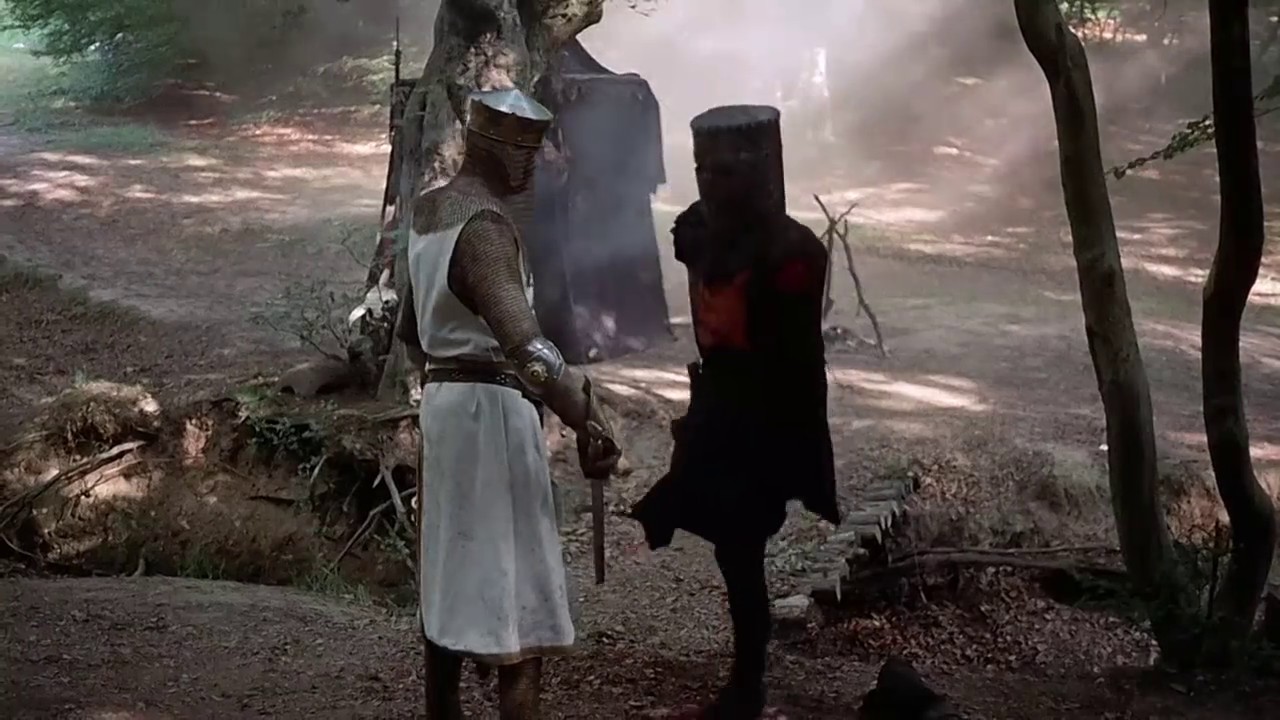
This encounter should take place when the PCs are on a modestly well-traveled road. As they come to a bridge high above a river, they find the path blocked by a sturdy, long-bearded man dressed in furs and tartans, leaning against a wicked-looking claymore.

The man introduces himself as Fergus MacConnell, a warrior of Sonderlund - or at least, he was. The Sonderlunding Highlanders are known for their fierce honor culture, and by the standards of his culture, Fergus has committed a grave crime - in a drunken brawl that got out of hand, he slew another man of a family his was honor-bound to protect ever since their ancestors made a pact on the battlefield generations ago. The Sonderlundings take ancestral pacts and oaths very seriously, and as an oathbreaker, Fergus was exiled from his homelands. Now, he seeks the only redemption that his lot deserves - a glorious death in battle against a well-matched foe.

The problem is, Fergus is very lucky by most standards, but very unlucky by his own. He's come a long way from home in search of greater challenges, and every enemy he's faced since has been no match for his blade. His journeys have brought him to this particular bridge, where, according to the customs of pas d'armes, he has the right to challenge any other travelers to a duel. Perhaps one he encounters along the road will grant him the warrior's end he seeks.

A note: To run home the point of Fergus's plight, it will be most effective if he is encountered where such sights are not commonplace - he's had to go a long way, after all, and his appearance should be unusual for the area. I would not run this encounter in Sonderlund, for instance. If you had a culture of honorable warriors in your setting, you can reflavor this encounter to fit them, but it's best to use it in an area far from the homelands of this culture.

The Encounter

If there is anyone in the party who looks to be a capable warrior and is not obviously hurt or harried, Fergus will challenge them to a duel to the death. He wants this to be a fair fight - if his would-be opponent is clad in anything heavier than chainmail or obviously displays magical powers, he will let them pass unharried (there would be no honor in losing to a foe one never stood a chance against in the first place!), and he insists on one-on-one combat; however, he could be talked into taking on the whole party if there is no one particular opponent who looks to be a clear threat. If the party obviously contains a necromancer (a practice highly taboo among the ancestor-worshiping Highlanders), Fergus will refuse to even entertain the offer of a duel, considering the entire party tainted by their presence.

If Fergus's chosen opponent refuses, he will taunt them about their honor, insisting that they are too cowardly to face such a foe as he, and boasting of his own accomplishments all the while (he struck down three brigands at once! He fell a mad lindwurm!). He will take great offense if his deeds are called into question, and may even start the fight himself if the PCs continue to antagonize him. But if his opponents truly refuse the duel after all his prompting, he will let them go on their way. He wants this to be an honorable fight, after all.

However, if Fergus learns of the location of an even worthier opponent than the PCs - for instance, if they know where he can find an NPC who might be agreeable to the challenge (at least in theory), or if they are seeking a fierce monster, Fergus will accompany the party as long as it takes them to reach such a foe. He will join them in any combats, but if the desired threat is encountered, he will insist on facing it one-on-one until one of them die.

In 5e terms, Fergus uses the stats of a Berserker. However, he has discovered two magical treasures on his journeys:

  • His sword is enchanted. It functions as a +1 greatsword (so his attacks are made with a +6 to hit and do 1d12+4 slashing damage), and its blade is inlaid with a runic inscription. A DC 13 History or Arcana check, or a PC with knowledge of classical arcane languages, can determine that the inscription reads "I call on thee, Unquenchable Torch."
    • Once per day, if recited aloud, this inscription causes the blade to glow for 1d4 hours, providing all the benefits of a Light spell. The glow will not end by any means other than the duration expiring. If it attracts undue attention, the PCs cannot do anything more than try to keep the light covered.
    • Fergus obtained this sword from a giant who failed to match his challenge before, and is familiar with its properties.
  • Fergus wears a golden brooch pinned to his cloak in the shape of a bird in flight, with emeralds set into its eyes. It is worth 300 GP, but unbeknownst to Fergus, it too is inlaid with a runic inscription. The inscription is engraved in miniscule text (a DC 20 Perception or Investigation check, or the use of a magnifying glass, is needed to discover its presence), and a DC 13 History or Arcana check, or a PC with knowledge of Elvish, can determine that the inscription reads "I need your eyes to see for me."
    • The brooch requires attunement. Once every two days, if recited aloud, this inscription causes the brooch to turn into a living finch that obeys the attuned user's commands, can communicate with them telepathically, and can be used to see and hear through as a familiar summoned by the Find Familiar spell. At will, it can be returned to the form of the brooch. The finch otherwise has the stats of a Raven. If it is killed, it turns back into the brooch, but the emeralds in its eyes have turned black and it can no longer be summoned.
    • Fergus was given the brooch as a gift from an elven maiden he saved from a wild beast. He does not know its properties and believes it to be no different than an ordinary brooch.
Fergus will insist on fighting the duel on the bridge. The bridge is ten feet across and sixty feet from end to end, and is 120 feet above the river below. The bridge has the Ledge tag (see here; creatures performing a Shove action that would knock a creature off a ledge gain +2 to their attack roll. Fergus won't use this tactic, as he considers it dishonorable).

At the far end of the bridge, Fergus has set a small campsite with a tent and a fire pit to allow protection from the elements. His tent contains a simple bedroll, his personal belongings, and 35 GP.

Saturday, September 23, 2023

And Now For Something Completely Different: Why Madoka Magica is OSR

I swear I haven't lost my mind! Come back!

I don't just post about learned and erudite things like history and medieval folklore on this blog, you know. Yes, I watch anime. Call me cringe all you want, but let's not deny that at the end of the day, the world of RPGs owes just as much to pop culture as it does to "serious" literary tradition. Anything can be a font of inspiration to make our games, and our lives, a little richer. And today, I'd like to explore one such example.

Besides, if you were really paying attention, you'd know I already dropped a few in-jokes to the subject of today's post back in one of my first posts on this blog. Purely because it referenced the same Germanic traditions I did. That's just what I do. Like some sort of enigmatic trickster god, my players never know if I'm referencing some obscure 13th century epic poem or some internet meme. You might not know either.

Anyway, today I'm going to talk about the anime series Puella Magi Madoka Magica. What makes the series notable for me is that it was the first anime - really, one of the first TV series in general - that I actively followed as it was being released (as it was being released in Japan, no less). It debuted in early 2011, while I was in high school, and I happened to become aware of it when it was freshly three episodes in (if you were there, you know). I proceeded to follow new episodes as they released week to week, and that was a kind of experience I had never really had before. Or, really, since, given the changing landscape of streaming and whole series dropping at once.

Rewatching it a few years back, I don't think Madoka Magica is a perfect series. I wouldn't even call it a great series. It settles for being merely good, but not without its flaws, and they only grow more apparent with age. The pace vacillates between being agonizingly slow and breakneck fast, but rarely settles on a comfortable middle ground. So many characters are frustratingly underdeveloped, and I've come to see the effective protagonist - one of the few who isn't - as the kind of person I would probably punch in the face if we were locked in a room together for long enough. The Watsonian lore and the Doylist themes of the show both raise all kinds of fascinating ideas and implications that feel like something could be done with them, but they never are. The individualist philosophy the series takes on the question of self-sacrifice never sat well with my utilitarian socialist self, and in light of the sequel movie (which split the fanbase in two - I'm solidly on the "it sucked" side of that rift), there's an unpleasant undertone of Objectivism that I can't help but pick up on whether intentional or otherwise. But there's something that makes the series hold a place in my heart.

And I suspect that something may just be how the setting seems to resonate so well with the ideas of a tabletop RPG - particularly one of the Old School ethos.

In the rest of this post, I'm going to give a rundown of Madoka Magica lore with a focus as to what aspects of it are gameable, and summarize how they abide by OSR principles. If you're already familiar with the series, you can probably skip this next part (though I recommend you at least give it a look because there's some things that never actually happen in the series but are totally missed opportunities, and you may not even know about them). If you aren't, please be aware that this discussion will contain spoilers if that matters at all to you - but for what it's worth, I wouldn't have gotten into the series at all if I didn't have it spoiled for me back then.

More under the cut.

Friday, June 30, 2023

Random Encounters From Your Miniature Drawer

I've always had somewhat of an off-and-on passion when it comes to miniatures. I've never really used them for my games - collecting and painting miniatures is an awful lot of setup, especially when you factor terrain and scenery into the equation, and (to riff on my last post) I fear that visual representations on the gaming table can influence the imaginations of my players more than I would like. Couple that with the fact that my regular gaming group is spread over multiple states and I handle everything over Skype chats anyway, I find it easier and more streamlined to just go with the theater of the mind.

At the same time, I've always liked the little bastards. Just to have them, and paint them, and to look at them for their own sake. Maybe even play a skirmish wargame once in a while. They aren't (or at least shouldn't be) necessary, but minis are fun.

Since moving into my new house, I've been getting everything unpacked and reassessing what I have. That includes going through my old, mostly unpainted collection of minis I've had for years, always hoping to do something with but never really getting there. I've been looking more into games like Planet 28 lately, so I figured it wouldn't hurt to sort through my collection and see what I could make of them.

What immediately struck me was that, when I was at my peak of miniature collecting, I was very much the kind of person who collected things I thought were cool, rather than trying to build a certain army.

There's a lot of Reaper fantasy monsters, mixed in with some Warhammer Fantasy monstrous types, and even a few packs of the old Chainmail range from when Wizards of the Coast briefly wanted to get into the metal miniature business. An ogre, a dire boar, plenty of lizardmen (of various sizes), a bunch of orcs, quite a few skeletons and ghosts, a handful of Skaven, some barbarians...

Wait a minute. I'm sensing a pattern here. Maybe I can't make a cohesive army, but I do have a pretty decent random encounter table. Let's throw some of those things together, and see if I can write a dungeon around it.

1d20:

1. Dire boar

2. 1d8 orcs 

3. 1d8 kobolds

4. Ogre

5. 1d2 myconids

6. 1d2 Rat Men 

7. 1d8 goblins

8. 1d6 mummies

9. 2d8 spiders

10. 1d4-1 (minimum 1) lizardmen

11. 1d8 skeletons

12. 1d4 specters

13. Vampire

14. 1d4 wolves

15. Werewolf

16. 1d4 berserkers

17. Dragon (I haven't painted it yet. Let's say a red one)

18. 1d2 trolls

19. Death knight

20. Earth elemental 

I also think the reason I like the myconids in Dark Souls so much
is because they remind me of these old Reaper ones.

Yeah, it probably looks pretty funhouse-ish right now, doesn't it? And quite unbalanced, but remember: not all random encounters need to lead to immediate combat. But that's where we start thinking about how we could make everything fit. And as we do, the seed of an entire dungeon starts to emerge.

Right now, there's two big themes I'm starting to realize with the monsters we're using. There's a lot of undead, and a lot of reptilian creatures (with the dragon, lizardmen, and kobolds). These could easily be grouped into their own factions. The vampire and the dragon sound like natural leaders for the two groups (the death knight could be a second in command to the vampire, or vice versa), and that raises the question of what they're doing in the same dungeon.

Maybe the vampire has set up a lair for his necromantic experiments, and it just so happened to be in a cavern already inhabited by the dragon. Perhaps he's trying to manipulate the dragon and his lizardman servants to his own ends, and to serve as extra muscle to keep out those pesky intruders who are getting suspicious as to who's taking all the dead bodies. Maybe he has some magic artifact or other precious treasure that he's bribing the dragon with, knowing the creature's greed. This way, smart players could exploit the factions by pitting them against each other - maybe they'll need to steal the treasure from the vampire to sway the dragon to their side! After all, those lizardmen could be useful allies, to say nothing of the dragon himself!

There's some other entries we could group into smaller factions too. The orcs, goblins, and maybe the ogre all seem like they could be allies. Maybe it's an independent tribe of Trollkin, or maybe it's more hired muscle being used by the vampire (which could make them jealous of the lizardmen if they feel they're being replaced - something that the players could win their allegiance over if they don't side with the dragon, since they probably will have a harder time doing that with skeletons). The dire boar could be a pet of the orcs, or just an independent monster. The myconids, spiders, Rat Men, trolls, and earth elemental would all most likely be random denizens of the dungeon. As for the berserkers, wolves, and werewolf, they could be independent too - but what sounds more fun to me is the thought that maybe this is a clan of wolf-worshiping barbarians, led by a werewolf! Maybe they're visiting a shrine somewhere in the dungeon, or raiding it for its riches or as a sort of initation ritual!

As you can see, there's a ton of ways that this seemingly random collection of creatures and characters can be made into something more cohesive. And like many instances of working within constraints, it can get the creative juices flowing to be given a set of incoherent, mismatched elements and to be forced to make them work. Already, I have the start of a dungeon that could last me plenty of sessions to come. And if I was the kind of person to use minis, I wouldn't even need to buy anything new for it!

I'd love to see other people try this exercise out. It's a great way to come up with dungeons and other scenarios that you might never have considered otherwise. Do you have a bunch of random miniatures laying around? Try making a random encounter table out of them, and let me know what you come up with!

Saturday, June 10, 2023

Visions of Tolkien's World

If you're active in the geekosphere, you may know about the upcoming Magic: the Gathering set based on The Lord of the Rings. What I take away from this is that the way Wizards of the Coast handles the lore of its two flagship properties is almost diametrically opposed, with D&D so locked down with the lore of just one setting out of the infinite potential of the creativity of DMs the world over, while the folks over at MTG embrace the opportunity to cross over with everything they can get their hands on, no matter how fitting - but that's not the subject of this post.

It do be like this though.

You may have heard the controversy over the set depicting Aragorn (and a few other characters, but he's
the most visible) as a black man. You can weigh in on whether or not it's fitting of the lore, or whether or not it's representative of tokenism, all you want. Actually, don't, I don't want my comments section to turn into a minefield. But that isn't what I'm here to talk about either. I don't have any strong feelings one way or the other about Aragorn being black. But it does excite me. What I do care about is how this represents a rare exploration into the potential for more diverse depictions of Middle-Earth and of Tolkien's stories than what we're used to.

I, of course, refer to the fact that they're not making everything look like the movies.

...what? What did you think I was talking about?

All jokes aside, I welcome the fact that the artists over at Wizards are putting their own spin on Tolkien's world. If you take a look at Tolkien art, you'll notice a very noticeable shift around the early 2000s, right when the Peter Jackson movies hit theaters and became smash hits. After this, everyone uses the movies as their template of what Middle-Earth is "supposed" to look like. Color palettes are drab and mostly shades of brown. Elves wear gold armor with elaborate, leaf-like designs. The Uruk-Hai use equipment with an industrial, almost brutalist feel. Hobbits have curly hair and dreamy boy-band looks. There's lots of open plains. Aragorn looks like Viggo Mortensen.

Which of these is concept art from the movies?
Trick question: none of them are.

Before this, though? There was no established "look" for Middle-Earth. Every artist was free to intepret the world in their own way, and we saw some really creative interpretations. Take a look:

There's of course the famous art of the Hildebrandt Brothers, which defined Tolkien in the eyes of many before the movies thanks to their popular series of calendars.


The genesis of pig-faced orcs?

Give Gimli his hat back.

Or how about the work of Ted Nasmith, whose lush, detailed landscapes paint the sort of vistas I can only hope to portray as a DM?


Famed Conan illustrator Frank Frazetta did a lesser-known series of Tolkien artwork that brings a pulp feel to the story.


Not sure how effective Eowyn's disguise is, though

The Rankin-Bass adaptation of The Hobbit probably comes the closest to my childhood mental image of Gollum.

And their depiction of the elves of Mirkwood can't be farther from Jackson's.

Foreign editions bring their own interpretations to the table, like this Finnish version of Gollum.

And this Russian Gandalf has a folksy, almost medieval-tapestry feel.

Would anyone today portray Boromir as a Viking, as seen in the Ralph Bakshi film?


What about a flippin' samurai? Because that's what the Finnish television series Hobbits did.


Hell, even the art straight from Tolkien himself seems refreshingly different to modern eyes.


I'm glad that Wizards is willing to experiment and go against the grain, not because I'm any fan of identity politics, but because a world where we only have one flavor of Middle-Earth is boring. Or one flavor of anything, really. As popular as the Jackson movies are, they're just one of a handful of adaptations, and one of even more personal interpretations of what was described in the text. And artists shouldn't be afraid, consciously or unconsciously, to share their visions because they're not the definitive look - they shouldn't even believe there is a definitive look to begin with. There should always be room for creativity, and the popularity of adaptations that came before shouldn't stifle that.

It's the same reason why, when running published modules, I never show my players any illustrations. The world and the characters is theirs and theirs alone to imagine, and I don't want to color that with any other interpretation. The players' mental image probably doesn't look anything like what's in my head. And that's a good thing.

Thursday, May 18, 2023

Interesting Terrain for Better Combat

They're using terrain - so can your players.

In my previous series of posts about making combat more interesting, I discussed the use of terrain features with mechanical effects. The Adventures in Middle Earth RPG from Cubicle 7 has some really good rules in there that I think deserve more use. Using those as a basis, here's some examples of how you can use terrain to shake up combat encounters. I've streamlined the rules and come up with a table to generate some interesting battlegrounds.

Terrain Tags

Before we begin, I'd like to lay out a few tags for terrain features in order to give them some mechanical support. This will help organize the different options and give some insight into how they can be used interestingly in play.

It should go without saying that, while these mechanics give a framework to make terrain interesting in play, they are not meant to limit how players can interact with their environment. Players may come up with other ways to exploit terrain features, and if it makes logical sense, they should be allowed to do so. DMs are free to use the rules as much or as little as they like - even if they don’t want so much crunch when it comes to combat, looking over the lists of options and thinking about how they could be used in a battle is a good way to add atmosphere to locations and descriptions.

Climbable - Features with this tag may count as high ground (see below) if a creature uses a full movement action to climb on top of them. Jumping down from the feature counts as normal movement.

Concealing - Creatures hiding behind or amidst this feature have Advantage on all ability checks relating to evading their opponents (eg. Stealth).

Covering - Creatures hiding behind this feature are considered to have half (+2 to AC and DEX saves), three-quarter (+5 to AC and DEX saves), or full (can't be targeted) cover for attacks made by opponents on the other side of the feature.

Dense - The presence of dense foliage makes it difficult to aim ranged attacks. Ranged attacks from short range are made with Disadvantage, and those from long range cannot be made at all.

Difficult - The feature counts as difficult terrain (ie. it costs twice as much movement to move through it).

Distracting - In the presence of this feature, creatures have Disadvantage on attack rolls and ability checks.

Exhausting - For every three rounds of combat a creature spends within the bounds of this feature, they gain one level of Exhaustion.

High Ground - A creature standing on higher ground has advantage on attack rolls when attempting to hit creatures on the ground below it.

Impassible - The feature cannot be crossed during combat.

Ledge - Creatures performing a Shove action that would knock a creature off a ledge gain +2 to their attack roll.

Narrow - Attacks using two-handed weapons are made with disadvantage when in this feature. Additionally, creatures must move in single file through this feature. 

Particulate - Creatures crossing this feature must make a DC 10 Dexterity saving throw or stir up dust, sand, or other particulate matter. Creatures standing next to this feature can use an action to kick the matter into the face of an opponent in melee range, forcing them to make the save. See the feature for details on what happens if this save is failed.

Path - This feature must be placed in the same area as at least one obstacle, and represents a safe route through that feature. Moving through this path does not incur the same penalties as the rest of the feature. If you roll a feature with the Path tags when no such obstacles exist, roll again.

Pit - Creatures falling into a pit take 2d10 damage. Climbing out of the pit requires a DC 10 Athletics or Acrobatics check.

Sheer - This terrain must be climbed. For every 10 feet of height a Sheer feature has (roll 1d6 and multiply the result by 10 if you wish to generate this randomly), a creature must use their entire move action to climb it. Ranged attacks made against creatures climbing a Sheer feature are made with Advantage.

Slippery - Creatures crossing this feature must make a DC 9 Dexterity saving throw or fall prone.

Steep - Creatures moving up along this feature move as though through difficult terrain. Creatures moving down along this feature move normally. Additionally, the terrain counts as high ground (see above) and creatures on the low ground also have Disadvantage when trying to hit creatures on the high ground.

Unsteady - Creatures fighting on, in, or amidst unsteady ground take -1 to their attack rolls.

Wildlife - Creatures moving through an area occupied by wildlife will alert any opponents to their presence. Opponents cannot be surprised by creatures that move directly through a wildlife-occupied area, and any checks to sneak up on an opponent adjacent to a wildlife-occupied area are made with Disadvantage.

Creating a Battlefield

For each combat encounter you have planned, roll 1d4-1 (minimum 1) times on the Terrain Features table for the relevant environment (or just choose what you would like to use). This will give you a number of features to place around the battlefield. I recommend you do this before a session - this way, you have time to plan out how the different features fit together, and can map out the area if you use battle maps. It may be a good idea to roll random encounters for a session in advance if you are doing this as well, so you know how many battlefields will be needed and can think about how enemies may make use of the environment.

Bodies of Water (d8)

1. Bridge; roll 1d4: 1-2, sturdy (Path, Ledge); 3-4, rickety (Path, Ledge, Unsteady)

2. Current (Creatures in the area of the current must make a DC 12 Acrobatics or Athletics check or be swept up, moving 15 feet in the direction of the current)

3. Deep water (Difficult, Exhausting)

4. Mud or gravel (Unsteady)

5. River, shore, or lake (Impassible)

6. Roaring rapids (Creatures adjacent to this feature have the Deafened condition)

7. Slick rocks (Difficult, Slippery)

8. Standing water (Any creature falling, or being shoved into, the water must make a DC 10 Constitution saving throw or suffer one level of Exhaustion)

Deserts (d12)

1. Chasm (Impassible, Ledge, Sheer). Roll 1d6: 1-2, no bridge; 3-4, rickety bridge (Path, Ledge, Unsteady), 5-6: sturdy bridge (Path, Ledge)

2. Deep sand (Difficult, Exhausting)

3. Hole or ditch (Concealing, Total Cover, Ledge, Pit)

4. Large rubble (Concealing, Difficult)

5. Loose sand (Particulate; if save is failed creatures gain the Blinded condition until the end of their next turn)

6. Pit (Concealing, Total Cover, Ledge, Pit. Roll 1d4: on a 3-4, it is concealed and is not visible until a creature falls in it)

7. Rock, roll 1d4: 1-2, medium (Climbable, Concealing, Three-Quarters Cover, High Ground, Ledge); 3-4, large (Climbable, Concealing, Total Cover, High Ground, Ledge)

8. Sandstorm (Creatures caught in the sandstorm must make a DC 15 Constitution saving throw or gain the Blinded condition for one round. Creatures failing by 5 or more also take 1d4 slashing damage)

9. Shifting sand (Unsteady)

10. Slope, roll 1d4: 1-2, average (High Ground); 3-4, steep (High Ground, Steep)

11. Uneven ground (Difficult)

12. Roll on the Ruins table

Forests (d20)

1. Bramble patch (Any creature passing must make a DC 10 Constitution saving throw or take 1d10 slashing damage. Roll 1d4 when generating this feature: on a 4, creatures that fail their save also receive the Poisoned condition).

2. Deer track (Path)

3. Hedge (Concealing, Half Cover, Difficult)

4. Low boughs (Difficult, Dense)

5. Mossy rocks or tree roots (Difficult, Slippery)

6. Mud (Unsteady)

7. Mushrooms (Particulate. Roll 1d4: 1-2, if save is failed they release spores that induce the Poisoned condition; 3-4, if save is failed they release spores that induce the Blinded condition for ten minutes)

8. Nettle patch (Difficult)

9. Pit (Concealing, Total Cover, Ledge, Pit. Roll 1d4: on a 3-4, it is concealed and is not visible until a creature falls in it)

10. Rock, stump, or fallen tree; roll 1d4: 1-2, medium (Climbable, Concealing, Three-Quarters Cover, High Ground, Ledge); 3-4, large (Climbable, Concealing, Total Cover, High Ground, Ledge)

11. Rotten tree (If combat comes within 10 feet of the tree, there is a 1 in 6 chance each round that it will fall, dealing 1d10 bludgeoning damage to all creatures in a 10-foot radius)

12. Slope, roll 1d4: 1-2; average (High Ground); 3-4, steep (High Ground, Steep)

13. Spiderwebs (Creatures crossing (or shoved into) the web must make a DC 12 Athletics or Acrobatics check and are considered restrained if they fail. They must make a successful check to escape, after which they may exit the web on any side)

14. Thick tree (Concealing, roll 1d4: 1-2, Three-Quarters Cover; 3-4, Total Cover)

15. Tightly-packed trees (Narrow)

16. Uneven ground (Difficult)

17. Birds, deer, rabbits, etc. (Wildlife)

18. Roll on the Ruins table

19. Roll on the Bodies of Water table

20. Roll on the Weather table

Grasslands (d12)

1. Hedge (Concealing, Half Cover, Difficult)

2. Pit (Concealing, Total Cover, Ledge, Pit. Roll 1d4: on a 3-4, it is concealed and is not visible until a creature falls in it)

3. Rock, stump, or fallen tree; roll 1d4: 1-2, medium (Climbable, Concealing, Three-Quarters Cover, High Ground, Ledge); 3-4, large (Climbable, Concealing, Total Cover, High Ground, Ledge)

4. Rotten tree (If combat comes within 10 feet of the tree, there is a 1 in 6 chance each round that it will fall, dealing 1d10 bludgeoning damage to all creatures in a 10-foot radius)

5. Slope, roll 1d4: 1-2; average (High Ground); 3-4, steep (High Ground, Steep)

6. Tall grass (Concealing)

7. Thick tree (Concealing, roll 1d4: 1-2, Three-Quarters Cover; 3-4, Total Cover)

8. Uneven ground (Difficult)

9. Birds, deer, etc. (Wildlife)

10. Roll on the Ruins table

11. Roll on the Bodies of Water table

12. Roll on the Weather table

Mountains (d20)

1. Chasm (Impassible, Ledge, Sheer). Roll 1d6: 1-2, no bridge; 3-4, rickety bridge (Path, Ledge, Unsteady), 5-6: sturdy bridge (Path, Ledge)

2. Cliff (Ledge, Sheer)

3. Deer track (Path)

4. Hedge (Concealing, Half Cover, Difficult)

5. Hole or ditch (Concealing, Total Cover, Ledge, Pit)

6. Narrow pass (Narrow)

7. Nettle patch (Difficult)

8. Precariously-perched boulder (If combat comes within 10 feet of the tree, there is a 1 in 6 chance each round that it will fall, dealing 1d10 bludgeoning damage to all creatures in a 10-foot radius)

9. Rock, stump, or fallen tree; roll 1d4: 1-2, medium (Climbable, Concealing, Three-Quarters Cover, High Ground, Ledge); 3-4, large (Climbable, Concealing, Total Cover, High Ground, Ledge)

10. Rocky ledges (Steep, High Ground)

11. Rubble (Difficult)

12. Large rubble (Concealing, Difficult)

13. Slick rocks (Difficult, Slippery)

14. Slope, roll 1d4: 1-2; average (High Ground); 3-4, steep (High Ground, Steep)

15. Thick tree (Concealing, roll 1d4: 1-2, Three-Quarters Cover; 3-4, Total Cover)

16. Birds, goats, etc. (Wildlife)

17. Roll on the Ruins table

18. Roll on the Tundra table

19. Roll on the Bodies of Water table

20. Roll on the Weather table

Ruins (d20)

1. Gravel (Unsteady)

2. Narrow walls (Narrow)

3. Rock, stump, crate, barrel, or fallen tree, pillar, or statue; roll 1d4: 1-2, medium (Climbable, Concealing, Three-Quarters Cover, High Ground, Ledge); 3-4, large (Climbable, Concealing, Total Cover, High Ground, Ledge)

4. Stairs (Climbable, High Ground, Steep)

5. Slick rocks (Difficult, Slippery)

6. Slope, roll 1d4: 1-2; average (High Ground); 3-4, steep (High Ground, Steep)

7. Track (Path)

8. Steady wall or barricade (Climbable, Concealing, Three-Quarters Cover, Impassible)

9. Unsteady wall or barricade (Half Cover, Impassible)

10. Well, hole, or ditch (Concealing, Total Cover, Ledge, Pit)

11. Chasm (Impassible, Ledge, Sheer). Roll 1d6: 1-2, no bridge; 3-4, rickety bridge (Path, Ledge, Unsteady), 5-6: sturdy bridge (Path, Ledge) 

12. Covered pit (Concealing, Total Cover, Ledge, Pit. Not visible until a creature falls in it)

13. Dust (Particulate; if save is failed creatures gain the Blinded condition until the end of their next turn)

14. Rubble (Difficult)

15. Large rubble (Concealing, Difficult) 

16. Spiderwebs (Creatures crossing (or shoved into) the web must make a DC 12 Athletics or Acrobatics check and are considered restrained if they fail. They must make a successful check to escape, after which they may exit the web on any side) 

17. Unstable Wall (Half Cover, Impassible. Creatures can use a shove action to push the wall onto creatures on the other side, which must make a Dexterity saving throw or take 4d10 bludgeoning damage) 

18. Birds, deer, rabbits, etc. (Wildlife)

19. Roll on the Bodies of Water table

20. Roll on the Weather table (if above ground) 

Settled Lands (d20)

1. Chasm (Impassible, Ledge, Sheer). Roll 1d6: 1-2, no bridge; 3-4, rickety bridge (Path, Ledge, Unsteady), 5-6: sturdy bridge (Path, Ledge)

2. Crop fields (Dense, Concealing)

3. Deer track (Path)

4. Hedge (Concealing, Half Cover, Difficult)

5. Hole or ditch (Concealing, Total Cover, Ledge, Pit)

6. Rock, stump, or fallen tree; roll 1d4: 1-2, medium (Climbable, Concealing, Three-Quarters Cover, High Ground, Ledge); 3-4, large (Climbable, Concealing, Total Cover, High Ground, Ledge)

7. Rotten tree (If combat comes within 10 feet of the tree, there is a 1 in 6 chance each round that it will fall, dealing 1d10 bludgeoning damage to all creatures in a 10-foot radius)

8. Slick rocks (Difficult, Slippery)

9. Slope, roll 1d4: 1-2; average (High Ground); 3-4, steep (High Ground, Steep)

10. Thick tree (Concealing, roll 1d4: 1-2, Three-Quarters Cover; 3-4, Total Cover)

11. Uneven ground (Difficult)

12. Well (Concealing, Total Cover, Ledge, Pit)

13. Birds, rabbits, stray livestock, etc. (Wildlife)

14-18. Roll 1d10 on the Ruins table

19. Roll on the Bodies of Water table

20. Roll on the Weather table

Swamps (d20)

1. Bog (Difficult, Exhausting)

2. Buzzing insects (Distracting)

3. Deer track (Path)

4. Mossy rocks (Difficult, Slippery)

5. Mud (Unsteady)

6. Mushrooms (Particulate. Roll 1d4: 1-2, if save is failed they release spores that induce the Poisoned condition; 3-4, if save is failed they release spores that induce the Blinded condition for ten minutes)

7. Pit (Concealing, Total Cover, Ledge, Pit. Roll 1d4: on a 3-4, it is concealed and is not visible until a creature falls in it)

8. Poisonous fumes (Creatures passing receive the Poisoned condition while in this feature and for 1d6 rounds after leaving it)

9. Quicksand (Creatures crossing (or shoved into) the quicksand must make a DC 12 Athletics or Acrobatics check. If they fail, they sink 1d4+1 feet into the quicksand. Escaping quicksand once one is stuck in it requires a DC 10 Strength check, with 1 added to the DC for each foot the creature has sunk. After escaping, creatures may exit the quicksand on any side)

10.  Rock, stump, or fallen tree; roll 1d4: 1-2, medium (Climbable, Concealing, Three-Quarters Cover, High Ground, Ledge); 3-4, large (Climbable, Concealing, Total Cover, High Ground, Ledge)

11. Rotten tree (If combat comes within 10 feet of the tree, there is a 1 in 6 chance each round that it will fall, dealing 1d10 bludgeoning damage to all creatures in a 10-foot radius)

12. Slope, roll 1d4: 1-2; average (High Ground); 3-4, steep (High Ground, Steep)

13. Sucking bog (Creatures crossing (or shoved into) the bog must make a DC 12 Athletics or Acrobatics check and are considered grappled if they fail. They must make a successful check to escape, after which they may exit the bog on any side)

14. Tall grass (Concealing)

15. Thick tree (Concealing, roll 1d4: 1-2, Three-Quarters Cover; 3-4, Total Cover)

16. Uneven ground (Difficult)

17. Birds, frogs, snakes, etc. (Wildlife)

18. Roll on the Ruins table

19. Roll on the Bodies of Water table

20. Roll on the Weather table

Tundra (d20)

1. Blizzard (Creatures caught in the blizzard must make a DC 15 CON save or be blinded for one round. Creatures failing by 5 or more also take 1d4 cold damage)

2. Chasm (Impassible, Ledge, Sheer). Roll 1d6: 1-2, no bridge; 3-4, rickety bridge (Path, Ledge, Unsteady), 5-6: sturdy bridge (Path, Ledge)

3. Deep Snow (Difficult, Exhausting)

4. Deer track (Path)

5. Fragile ice over standing water (Any creature falling, or being shoved into, the water must make a DC 10 Constitution saving throw or suffer one level of Exhaustion and take 1d10 cold damage. Not visible until a creature falls in it)

6. Loose snow (Particulate; if save is failed creatures gain the Blinded condition until the end of their next turn)

7. Pit (Concealing, Total Cover, Ledge, Pit. Roll 1d4: on a 3-4, it is concealed and is not visible until a creature falls in it)

8. Rock, stump, or fallen tree; roll 1d4: 1-2, medium (Climbable, Concealing, Three-Quarters Cover, High Ground, Ledge); 3-4, large (Climbable, Concealing, Total Cover, High Ground, Ledge)

9. Rubble (Difficult)

10. Large rubble (Concealing, Difficult)

11. Shrubbery (Concealing)

12. Slope, roll 1d4: 1-2; average (High Ground); 3-4, steep (High Ground, Steep)

13. Sturdy ice (Difficult, Slippery, Unsteady)

14. Thick tree (Concealing, roll 1d4: 1-2, Three-Quarters Cover; 3-4, Total Cover)

15. Uneven ground (Difficult)

16. Birds, reindeer, etc. (Wildlife)

17. Roll on the Forests table

18. Roll on the Mountains table

19. Roll on the Ruins table

20. Roll on the Weather table

Underground

1. Chasm (Impassible, Ledge, Sheer). Roll 1d6: 1-2, no bridge; 3-4, rickety bridge (Path, Ledge, Unsteady), 5-6: sturdy bridge (Path, Ledge)

2. Dust (Particulate; if save is failed creatures gain the Blinded condition until the end of their next turn)

3. Foul stench (Distracting)

4. Low ceiling (Medium-sized or larger creatures must crouch when moving through this area and make all attacks and ability checks at Disadvantage)

5. Mushrooms (Particulate. Roll 1d4: 1-2, if save is failed they release spores that induce the Poisoned condition; 3-4, if save is failed they release spores that induce the Blinded condition for ten minutes)

6. Narrow walls (Narrow)

7. Pit (Concealing, Total Cover, Ledge, Pit. Roll 1d4: on a 3-4, it is concealed and is not visible until a creature falls in it)

8. Poisonous fumes (Creatures passing receive the Poisoned condition while in this feature and for 1d6 rounds after leaving it)

9. Rock; roll 1d4: 1-2, medium (Climbable, Concealing, Three-Quarters Cover, High Ground, Ledge); 3-4, large (Climbable, Concealing, Total Cover, High Ground, Ledge)

10. Rocky ledges (Climbable, High Ground, Steep)

11. Large rubble (Concealing, Difficult)

12. Slick rocks (Difficult, Slippery)

13. Slope, roll 1d4: 1-2; average (High Ground); 3-4, steep (High Ground, Steep)

14. Spiderwebs (Creatures crossing (or shoved into) the web must make a DC 12 Athletics or Acrobatics check and are considered restrained if they fail. They must make a successful check to escape, after which they may exit the web on any side)

15. Thick pillar (Concealing, roll 1d4: 1-2, Three-Quarters Cover; 3-4, Total Cover)

16. Uneven ground (Difficult)

17. Unstable stalagmite (If combat comes within 10 feet of the stalagmite, there is a 1 in 6 chance each round that it will fall, dealing 1d10 bludgeoning damage to all creatures in a 10-foot radius)

18. Bats, rats, etc. (Wildlife)

19. Roll on the Bodies of Water table

20. Roll on the Ruins table

Weather (d8)

1. Birds are flying overhead (Add a Wildlife feature to the battlefield)

2. Cloud cover blocking sunlight (Treat as dim light. Reroll if the encounter takes place at night)

3. Fog (Creatures gain the Blinded condition)

4. Foreboding atmosphere (Creatures must make a DC 10 Wisdom saving throw at the beginning of combat or have Disadvantage on ability checks and attack rolls for the remainder of the encounter)

5. Lightning (Every 10 rounds, there is a 1 in 100 chance of a bolt striking a random creature if it is out in the open, dealing 10d6 lightning damage and inducing the Deafened condition for 1 minute. If creatures are less than 10 feet apart, treat each group as a single creature and roll randomly to determine which is hit. A creature can make itself the target of the lightning bolt in place of another if it succeeds on a DC 20 Dexterity saving throw).

6. Rain or snow (Distracting, Exhausting, unless in shelter)

7. The sun breaks through the clouds as the battle begins (Creatures without Sunlight Sensitivity gain Inspiration. Reroll if the encounter takes place at night)

8. Wind (Ranged attacks are made with Disadvantage)

Examples

Let's say that for my next session, I expect there to be a combat encounter with the PCs taking on a raiding party of six orcs in a forest. I roll my d4 and come up with a 3, so subtracting one, I have two features to roll from the Forests table. Rolling a d20 twice, I get a 7 and a 12. This means the battlefield will include Mushrooms and a Slope. In both cases, I'll need to do some further rolling. For the mushrooms, I roll a 4 on the d4, so these are the kind of mushrooms that will release blinding spores if disturbed. For the slope, I roll a 2 on the d4, so this is an average-sized slope.

Now it's time for me to think about how I can use these features in the battle. I'm going to say that three of the orcs will position themselves on the slope to fire arrows down at the PCs from the high ground, while the remaining three will charge into melee. So I'll place the slope on the side of the battlefield the orcs will enter from (remember, having enemies exploit terrain features against the PCs is a good way to let them know that's an option).

The mushrooms are an interesting tactical element that can help or hinder the PCs depending on what happens. I'll place in the middle of the battlefield, between the party and the orcs, so that either stands a risk of triggering them. With this in mind, a rough map of the battlefield for this encounter might look like this:

Listen, it'll do the job.

Now, let's say I want to draw up a map for a combat encounter with four Rat Men taking place underground. Here, my d4 turns up another 3, so once again, I have two features. Rolling the d20 twice, I get a 9 and a 14. My battlefield will contain a Rock, and another d4 roll turns up a 2, so it's a medium-sized rock. It will also contain a Spiderweb.

Rat Men are sneaky creatures, so I'll take advantage of the Concealing feature here. When the PCs encounter the Rat Men, they'll only see three of them out in the open. The last will be hidden behind the rock, and will make a Stealth check with Advantage against the PC's Perception to see if he can avoid detection. If he stays hidden, he might try to sneak around and attack from behind if the PCs approach the rock. Otherwise, he might climb up on it to attack from high ground, or take advantage of its three-quarter cover!

As for the spiderweb, since this battle is underground, I'll set it in a cavern with a few discrete exits. Let's have the web blocking one of those exits - for fun, let's make it the exit closest to where the Rat Men are camped. That way, anyone who tries to break away from the battle (PCs or Rat Men - don't forget about morale!) risks being tangled up in the web! Thus, a map might look like this:

Don't these already sound like much more interesting combat encounters than your typical 5e slugfest? Throwing in a few terrain features helps get players and DMs alike thinking tactically, and creates interesting options that can shake things up. I'd love to see them be used more. And if you have any other ideas for terrain features, feel free to drop them down below!

Thursday, April 13, 2023

The Lunar Lands Guide to Combat, Part 2

 As promised, here's the second half of my guide to making 5e combat more engaging and interesting. This part is focused on ways you can speed up combat encounters to prevent them from bogging down gameplay. For the first part, on making combat more varied, dynamic, and interesting, refer to this post.

Speeding Up Combat

Providing interesting options is just one side of the coin. In order to make combat feel less like a slog, it helps to spend as little time in combat as possible. Sounds pretty reasonable, right? Especially when you have large numbers of enemies, rounds can drag on, and it can take longer than you'd like to even thin the enemy ranks to a reasonable level. But there are ways to deal with this too.

System Shock/Massive Damage

Not everyone can keep on fighting this way.

A few games, and a few editions of D&D, have a mechanic usually called System Shock, Massive Damage, or something to that degree. Sometimes it's a core rule, sometimes it's an optional rule. By default, 5e doesn't have one - but there are plenty of house rules people have shared out there. They all work a little differently, but the general idea is that an attack that does damage above a given threshold will have consequences besides merely losing HP.

What I do is that if a combatant is dealt damage greater than half of their max HP in one attack, they must make a CON save. If they fail, you roll on a table that can produce various consequences, which range from leaving them stunned for a turn to dropping them outright. This can make dealing a heavy blow even more satisfying, and makes for a more realistic effect where combatants can't necessarily keep taking heavy hits and stay fighting the whole time through. And of course, it gets enemies killed faster.

Minions

These are minions.
No, not that kind. I'm talking about the feature famously introduced with 4e, and that, like many things in 4e, was quickly and unceremoniously dropped afterward with a tacit agreement to never speak of it again. While I understand the hate for 4th Edition in a lot of respects, let's not kid ourselves and say that it didn't have some ideas worth salvaging. And minions have definitely had some staying power with many DMs.

The most basic explanation of a minion is that it's a monster with one hit point. This doesn't necessarily mean the same thing as the monster being weak. It could still have attacks that deal a lot of damage, or it might have high AC. An ogre can be a minion, and its stat block would be completely unchanged in all respects but HP. They just die as soon as the PCs get a successful hit on them.

There are other traits to minions - to help counteract their low HP, they also don't take damage if they succeed on saves in the cases of effects where they'd ordinarily take half damage, and in 4e, they also dealt damage at fixed amounts rather than rolling. But it's up to you if you want to do these - the most important feature of minions is the single hit point.

So are these.

The idea behind minions is to simulate action sequences in movies in which the heroes mow down
hordes of enemies with ease. As such, they can lend a more cinematic feel to mass combat. They also cut down on the amount of bookkeeping you need to do to keep track of each enemy's HP, and can make battles against large numbers of enemies that would ordinarily take a long time go faster. If this is something you're after, it may be worth using. Some DMs prefer a more realistic, simulationist feel to their games, or they may feel like minions trivialize combat. I personally don't use minions, but they're certainly an option if you want to make combat flow faster.

Morale

Sometimes, running away is the only
Secret Technique you need.
But what if enemies don't need to die to begin with? In most official modules for 5e, pretty much every combat encounter includes a note to the effect of "the X fight to the death." Never do this. Unless you're fighting something mindless like zombies or constructs, or someone so blindly determined to take you down that only death can stop them, there's no reason this would be the case. Most living things are not video game enemies. They'll only fight if they feel confident they can win - if losing seems to look like a likely option, or even an option at all, survival instinct kicks in and they'll try to flee. If your enemies start withdrawing from combat more, not only will combat go faster if you don't have to kill everything not on your side to make it stop, your games will feel more realistic, and your PCs won't look quite as murderous.

Among the OSR community, you'll find many people advising DMs to make morale checks for enemies. Imagine my surprise to find out that 5e does, in fact, support this! No one talks about it, because no one actually uses it. But it is in the core rules! As written, a morale check is a DC 10 WIS save. If the enemy passes, it stays in combat. If not, it immediately goes to disengage and move as far away from the fighting as possible on future actions. Yep, it's that simple!

I suppose that part of the reason people don't use morale much any more - in addition to just being accustomed to the more simplistic behavior of enemies in video games - is because the rules may be too simple. There's no criteria given for when enemies should start making morale checks, or what circumstances would prompt them. Some other bloggers have proposed more intricate systems, but I just go with my judgment on this. Essentially, I make a morale check for any enemies I believe would reasonably feel outmatched. For instance, if a group of enemies drops to half strength, those that remain might all make a morale check - if Morglub the orc just watched five of his fellow warriors fall to the party, why should he expect he'll fare any better, especially without reinforcements to back him up? Other times, I'll roll it if a single enemy was taken out in a particularly decisive or shocking fashion (you could even tie this into System Shock), wowing its comrades into thinking their foes are not to be trifled with. If the enemies don't have magic at their disposal and they just witnessed a magic-user in the party pull out a spell they can't hope to defend against, that could also tip them off that this is trouble. Remember, you're the DM - don't be afraid to make the call!

Unique Traits

This...

This isn't something mechanical to make combat faster, but I do think it's worth discussing here if I'm going to teach you how I run combat. In battles against groups of enemies, especially enemies that use the same statblock, it can get confusing who's attacking who, especially if you (like me) use "theater of the mind" combat without maps. Sometimes it can even be confusing for the DM if they don't know which enemy to deduct HP from after a successful attack! If we want to streamline combat to prevent it from becoming a slog, one easy trick to avoid this is to describe each individual enemy with an identifying trait.

For instance, instead of "the bandit Steve attacked on his last turn" or "the skeleton on the left", players and DMs can refer to "the bandit with the patchy beard" or "the skeleton in the rusted chainmail". These traits can be as simple as describing an enemy's hair color, or what equipment they're using, or distinctive marks like scars or tattoos, but if each enemy has one, it's much easier to tell them apart. Obviously, this works easier for humanoid enemies, not only because they can wear and wield different gear but because we, as humans, are better at noticing differences in things that look like us. If the party is fighting a pack of wolves, for instance, it might be harder to come up with a unique detail for each, but there's still plenty of options - maybe one has a scar over the snout, one has a notch in its right ear, and so on.

...not this.
I'm aware that monster statblocks tend to specify weapons or armor that a given enemy uses, but just describe them differently while using the same stats. You can refer to "the goblin with the axe" and "the goblin with the shortsword," but it's probably easier to roll the same dice for attacks from both. I mean, you could look up the stats for an axe over a shortsword and track them separately for each goblin, but we're here to make combat less slow and granular.

If you use miniatures, this may be a little easier, as players are able to visually identify the unique traits of different enemies and tell which is which on the tabletop if they can be seen in physical space. The downside of this is that you might need a lot of miniatures to make sure each is distinct enough to easily be referenced - though if necessary, the same model could be differentiated with different paint jobs.

An added bonus of this method is that, in addition to making combat move faster at the table, it helps add more detail to your descriptions and can better set the scene for your players. Describing each enemy differently makes them feel less like nameless, faceless video game mooks and more like individuals. Some enemies might become especially memorable through your embellishments in ways a generic description wouldn't accomplish!

Ending Combat Early

It's probably best not to do this with
your final boss, though.

Finally, nothing speeds up combat quite like giving the players an option to bypass it or cut it short entirely. There are a number of ways to accomplish this - for instance, there could be some way to trigger a trap in the room that automatically takes out enemies, like dropping them into a pit (perhaps to make this happen, players would need to use alternate actions to operate machinery, as I discussed in our last installment). Or there might be a special item somewhere in a dungeon that could allow a fight to be avoided - perhaps an enemy is looking for something and will step down without a fight if it's offered, or a magic item could hold the key to instantly defeating a foe.

Some might find such battles anticlimactic, but there's a strong precedent behind this sort of thing. The Fighting Fantasy gamebooks often included tough fights that could be avoided if the player had a specific item or spell on hand, or else used an alternate route that got around them (if you aren't familiar with Fighting Fantasy, I can't give a big enough recommendation to Turn to 400, which will give you a good idea of what these books were like in addition to being one of the funniest blogs I've ever read). And many an old-school DM will advise against making every encounter rely on combat as the only solution.

It's important to keep in mind that both of these are relatively high-lethality systems, so a wise player would often use combat as a last resort. If the battle stood a high chance of killing the party, then most players would welcome a way around it! If you tend to run higher-powered games where PCs don't die as often, though, you may find players feeling this method is too easy.

Also, don't forget these don't have to be instant win conditions. Sometimes, the best course of action for PCs is to flee battle. When designing encounters, it's always a good idea to include something the party could use as an escape route, just so they know it's an option and don't feel forced into fighting a losing battle.

Do you have any other tips and tricks to make combat fun? Let me know in the comments!