Monday, September 22, 2025
Modules As DM Screens
Wednesday, February 5, 2025
In Defense of Gor, Part 4: Stuff I Like
You might find some of these things cool too. Or you might not. You might even find other parts of the setting more interesting - your perspective is unique, and all your own. I encourage you to peruse the rich lore of the novels; with 59 years in print and 38 books, there's bound to be something that interests or inspires you. But these are mine.
Technology Laws
In my personal opinion, Gor is the only setting to do Medieval Stasis right. For those unaware, Medieval Stasis is a concept in worldbuilding describing how a setting can have an in-universe history stretching back centuries, yet never develops modern technology in order to keep the medieval fantasy feel. Various settings over the years have come up with their own answers to this, ranging from "magic makes technology unnecessary" to "technology just doesn't work on this world" - I, personally, just go with "the stories I am telling in this setting happen to take place during its preindustrial era." I don't think you really need an excuse to have medieval technology and society in your setting, considering our world had such things for hundreds of years. However, if one does need an excuse, Gor handles this concept the best out of every setting I've seen.
Gor, as a planet, exists simultaneously with our Earth in the modern era, just on the other side of the sun. However, the people there have technology around the level of Earth's Iron Age, with some later innovations like crossbows. Although it's technically a sword and planet story, I find the feel a lot closer to sword and sorcery - or perhaps sword and sandal - because of the relative lack of advanced technology. However, the possibility for advanced technology is there - but it's limited by the Priest-Kings.
![]() |
| Art by Chris Achileos |
If you're wondering how the Priest-Kings go about doing this, it's quite simple. Most Goreans don't know that they're alien bug people at all. They've established a cult around themselves to posit themselves as gods, and insist that technology is to be shunned as witchcraft. They themselves have technology the Goreans don't have access to, including spaceships, and use it to work "miracles," including causing people who invent banned technology to spontaneously combust. That tends to get the impression across.
Some might recognize this as quite similar to Forgotten Realms, in which the Harpers are an international organization that suppresses societal and technological progress by assassinating anyone who disturbs the status quo. The difference is that the Priest-Kings are actually portrayed as having questionable motives. They're actively suppressing progress in the name of their own ends, be it research or something more nefarious. This is an easier sell to me than accepting the Harpers as good guys in spite of everything they do. One could even conceive of a campaign in which the Priest-Kings are set up as the villains for this, and the PCs are rebelling against them. I find this answer does a good job of answering why technology doesn't advance, grounding it from a conceivable in-universe explanation that - better yet - offers compelling opportunities for storytelling.
Furthermore, if technology is illegal but not impossible, this creates even more opportunities. You could easily pull an Expedition to the Barrier Peaks and have off-world technology take the place of magic items in a Gorean campaign. Goreans would likely react to, say, a laser gun or a communicator as enchanted artifacts, which could help introduce what functions mechanically as magic into a world where actual magic doesn't exist. In addition, the party would likely have to hide these items from the authorities, lest they be reported as witches, which presents opportunities for conflict. This is actually where I would deviate from the books a little - instead of having the Priest-Kings be able to spy remotely on people and immolate them at will, if I was running a Gorean campaign, I would have "witches" be hunted down and persecuted by the people of Gor. That would make it easier for PCs with such items to avoid undue attention, and could allow for more human drama if the enemies they stand to make from using technology are people they can see and interact with directly.
Kurii
In terms of the roles they play in the story, the Kurii are essentially Gor's equivalent of orcs - a monstrous race that usually appear as antagonists and enemies of Gorean society. However, they deviate from the stereotypical orc in a number of ways, and those ways provide some insight into how one can shake up fantasy tropes to make them feel more fresh.
First of all, they are only orc equivalents in terms of the role they play in the story. Visually, they have more in common with Wookiees than anything else, standing seven feet tall and covered in thick fur, with claws and fangs. We've seen plenty of settings where the main bad guy race is one of tusked green-skinned brutes, but how many can you think of where the heroes fight armies of Bigfeet?
Secondly, in keeping with its attention to detail in worldbuilding, the series goes into great depth about the society, culture, and biology of the Kurii. Like most portrayals of orcs, they are a barbaric warrior race that enjoy fighting and believe that might makes right; they engage in ritualistic combat in order to be allowed the right to mate. They also see humans as a food source, and their word for "human" translates literally to "meat animal."
Where things get interesting is in their biology. They are more active at night, they go into a frenzy at the scent of blood like sharks, and they store food in a second stomach to digest it later, meaning they don't need to carry food while traveling. They also have four sexes, although two of them - Dominant and Nondominant - seem to be more akin to genders and have more of an impact on their place in society than their role in reproduction. Then they have another sex called a Blood-Nurser, which is akin to a cross between a queen insect and a biological incubator; an Egg-Carrier, after being fertilized by a Dominant, implants that egg in an immobile Blood-Nurser to gestate until the baby forcibly eats its way out of the Blood-Nurser. All in all, the Kurii truly feel like another species, and not just humans with funny heads.
What's perhaps most interesting of all, though, is that despite their warlike ways, Kurii are not merely dumb brutes that exist to raid and prey on civilization. They are, in fact, an advanced spacefaring race that are in a state of cold war with the Priest-Kings. Many Kurii on Gor are actually secret agents working to undermine Gorean society and overthrow the Priest-Kings, though others have gone native and have no ulterior motives. They don't just pull out guns and shoot everyone because they too are subject to the Priest-Kings' technology laws and will be persecuted for them, so they use the same limited technology Goreans do. It certainly subverts expectations if a setting's equivalent of orcs are some of the more advanced races around (ironic, because that's what they were in Tolkien, but I digress), and if they have bigger motives than just wanton destruction. Those motives also help to justify their role as villains. They aren't inherently evil, and in fact some Kurii even develop respect for the protagonists of the stories, but they're on the other side of a war most Goreans don't even know they're fighting.
Exotics
Gor is a humanocentric setting, but other races do exist. The aforementioned Kurii and the Urt People, for instance, are sapient nonhuman species, but they don't appear to play a very big part in mainstream society. Most Goreans of most cultures are human. However, the books do make occasional references to so-called Exotics. They don't go into much detail about them, which is unfortunate, but the information we do get is quite interesting.
An Exotic is a slave that possesses some unusual quality. The term is a broad one, and it isn't limited to physical characteristics. One example given is that of a female slave who was raised not knowing about the existence of men, only having been exposed to women. But the term also describes slaves specifically bred to have unusual physical features. These traits can be cosmetic, like unusually large earlobes, or more unusual and stretching the limits of plausible human biology, like having venomous saliva.
I find this concept quite interesting, and it could certainly be used to add additional races to a setting that doesn't have them. Want to play a dwarf? How about someone with horns? Just keep whatever stats are relevant and flavor them as Exotics bred for those traits. It could also be a good excuse to break out your favorite mutation table. Even those Exotics that don't possess strange physical features could present interesting opportunities to roleplay as a character with a very unusual outlook on the world, shaped by their upbringing to serve as a curiosity.
Wagon People
No one can get kaiila right.
Those of you with a good memory might remember that what kicked off this series in the first place was me kitbashing some miniatures to make an army of Wagon People for something like Kings of War. I started on that a while back, and I do intend to return to it. My motivation goes beyond simply having the appropriate parts on hand, though. Out of all the cultures detailed in the series, the Wagon People might be my favorite.
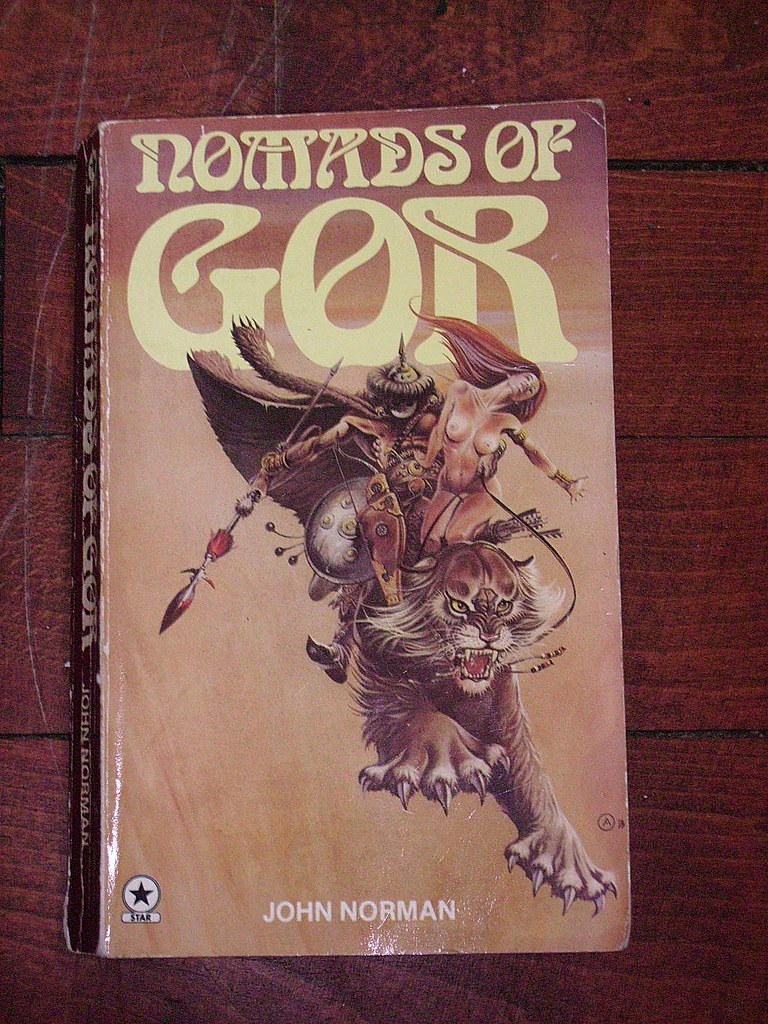
The Wagon People play an extensive role in the fourth book in the series, 1969's Nomads of Gor. Because so much of the book focuses on them, we know quite a bit about their society and culture, which provides ample source material for gaming. Quite fortuitously for my project, we know what weapons and tactics they use, how their military units are organized, and even their heraldry - it all reminds me of the information found in wargaming materials (or even how humanoid armies were organized in the old Monster Manuals), and gets back to my point about how John Norman totally would've been involved with tabletop gaming had he been born a decade later. But besides being easily adaptable to a gaming context, the Wagon People are just cool.
As nomadic raiders and pastoralists, they fill a role similar to the Mongols; indeed, they seem to be largely based on them. They travel in tents on wheeled platforms similar to yurts, and their armies consist almost entirely of cavalry. However, while many cultures introduced later in the series have details borrowed heavily from their real-life counterparts, Norman did not get so lazy with the Wagon People, and they have many quirks unique to them.
They use an elaborate system of facial tattoos to indicate rank in society. They don't eat vegetables (meat, dairy, and fruits are okay) because they have a cultural taboo against eating anything that touches dirt. They accept certain outsiders as welcome guests and allow them to trade with them, but in order to receive such status (marked by a brand on the forearm), one must present themselves to the Wagon People offering gifts, and if they aren't impressed they might just kill you. Because they trust their memory more than the written word, they have people tasked with memorizing the calendar and recounting the passage of years - which are named after important events that happened in them, and are counted from snowfall to snowfall, so they don't have a fixed length. I love these sorts of little cultural details that give you a window into how these people think, and help make their societies feel more real, fleshed out, and lived-in.
Also, perhaps more usefully to DMs, the Wagon People are a good example of how you can vary up a culture based on a real-life one by mixing and matching details from other cultures. Although they're mostly based on the Mongols, they don't feel like Mongols, but like something all their own. A lot of the details are either completely invented or taken from other sources - they have skalds, for instance, and some have noted that they appear to be partially based on gauchos, as they live on the plains and use bolas and throwing knives. If this is the case, it showcases how the New World has just as many interesting cultures as the Old, and how even for a medieval fantasy setting one need not limit themselves to the medieval era when it comes to inspiration. As someone with a culture based on Mexico, I should know.
Finally, while most Goreans ride either giant birds or dinosaurs, the Wagon People ride a creature called a kaiila. Most renditions that I've seen draw them as horses with fangs. This is coward behavior. To me, the way they're described, with long necks, silky hair, and clawed feet, makes them sound much more like carnivorous killer death-llamas. I shouldn't need to explain why Mongols with bolas on carnivorous killer death-llamas are cool.
Verticality
We exist in three-dimensional space. That statement might seem trivially obvious on the surface, but it's something a lot of games forget. Because of the limitations of depicting it on maps, and because of the fact that we rarely have to interact with our world on a Z axis unless we live in a big city, not a lot of maps truly make use of three-dimensional space. Adding towers, chasms, tall ceilings, and the like can really liven up your dungeon design, quite literally giving the players a new dimension to explore, and adding new challenges to how they approach the world around them. For instance, they might need to scale a sharp cliff in order to get from one level to another, or balconies on one level could overlook rooms on another, providing opportunities for ambush. I think it's something a lot of people forget, since we're so used to dungeons being stacks of simple floors on top of one another. But looking at real-life cave maps shows how complex an enclosed vertical space can really be.
Gor has verticality baked into its setting, and because of that, it serves as a good illustration of what vertical design can do for a game. It achieves this through two ways - first, through the ready availability of flying mounts (one can buy a tarn for a single gold tarn disc, although that's "more than many common laborers will earn in a year"), giving characters a means to maneuver up and down, and secondly, through the use of vertical space in the design of its locations. Many large Gorean cities are complex multi-leveled affairs; buildings consist of tall towers, with different businesses and facilities on different levels, and bridges spanning between them. One could navigate a city not only through the cardinal directions, but also moving up or down, and discover new things. Mapping a Gorean city would be quite similar to mapping a dungeon, and could provide just as many opportunities for exploration. It would also make chases through the streets more exciting, as PCs would have to move between levels - or avoid falls off narrow bridges, particularly because Goreans think railings are for cowards. All in all, it's food for thought that presents an interesting perspective for designing dungeons and other spaces.
Spider People
He just wants to discuss philosophy.
I love these guys. The Spider People don't really do a whole lot in the series. There's one brief encounter with them all the way back in Tarnsman of Gor, and they kind of get forgotten about afterward. But the concept is so batshit insane that I have to mention it.
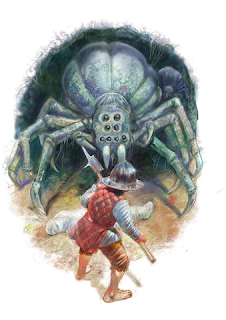
The Spider People are another sapient race on Gor, dwelling in the swamps north of the city of Ar. With a name like that, your mind might conjure the image of driders. They're part spider, part person, right? No - Spider People are literally just giant spiders. They're "people" insofar as they're capable of rational thought and speech, but there's nothing anthropomorphic about them. Considering giant spiders are a staple of dungeons, having one of them turn out to be a friendly, personable NPC could be a fun way to subvert your players' expectations.
What's also quite interesting is their culture. Although the Spider People are sapient, the people of Ar hunt them for sport and to harvest their webs. They could easily wipe them out if they wanted to, but keep a small population alive to have a steady source of silk. The Spider People are completely okay with this and do nothing about it, because they have such a strong taboo against violence that they will not do anything to harm another sapient being, even in self-defense. If a person wants to kill them, they'll just assume they have a good reason to and let it happen. This line of thinking is so alien that it stands as a great example of Norman's approach to worldbuilding, making his cultures and races feel truly distinct from humanity, and avoiding Flintstonism.
I hoped you enjoyed this look at the world of Gor. Hopefully, you came away from it with a better idea of what the setting is, how it's informed gaming, and how it could continue to do so. For all the books' flaws, I truly do find the series to be up there with some of the most fascinating worldbuilding projects put to paper, and I'm sure many of its ideas would appeal to DMs.
This will probably be the last post I write about Gor. There's so much more I could talk about, but Luther has already catalogued everything far better and more extensively than I ever could. I might make some more posts here and there if the mood strikes me, but for those interested in looking into the setting more, I encourage you to click around his site, or even to seek out the books if you truly are interested. Until then, I'll be continuing to post on other settings, and intend to get back to The Saga of the Ortegids. See you then!
Tuesday, January 21, 2025
In Defense of Gor, Part 3: Gaming on Gor
In fact, after reviewing these things, I am convinced that, had he been born ten years later, John Norman would likely have been an early contributor to the RPG industry. To date, the only official Gor RPG is Postmortem Studios's Tales of Gor, originally published in 2017. We have no reason to believe that Norman ever played an RPG, or even knows what one is. But he was an advocate of roleplaying as a activity in Imaginative Sex, citing it as a natural behavior that one should not be afraid or ashamed of engaging in, and as a safe outlet for desires that would be unethical or impossible in real life. Yes, he's talking about a different kind of roleplaying game here, but it isn't hard to see how he might be intrigued by tabletop gaming if he had been in the circles where it first arose. For that matter, the setting he created shares many traits in common with some of gaming's most enduring settings, as well as the ideals elaborated by those writing on the subject.
Before we begin, though, I would like to include an addendum to my last post. White Dwarf, back when it was a general gaming magazine and not solely a Games Workshop-related publication, used to run a column called Fiend Factory, listing new monsters for D&D, often submitted by readers. Many of those entries would later be collected in the Fiend Folio, making that book and its monsters a part of the British old-school gaming tradition. Issue 49 features a Fiend Factory article themed around insects, and includes stats for the golden beetle, a creature prominently featured in 1968's Priest-Kings of Gor. The entry, submitted by Steven Quayle, specifically lists the novel as its source material. Once again, we have evidence that many gamers of the era read Gor novels and wished to bring them to the table.Anyway, back to our subject of the day: what makes Gor so gameable?
1. Deep, Readily Accessible Lore
Though the novels are infamously dry and many find the prose unexciting, it cannot be denied that a lot of thought went into the creation of Gor as a setting. Over the course of 38 books, Norman extensively details multiple cultures, locations, and characters, exploring what this world looks like, who lives there, and how these people think, act, and behave. We know how Goreans fight in wars, what their etiquette is like, how their castes are structured, what they eat, and so on. This is the same sort of information that might be found in an RPG setting guide - and because of it, it would be quite easy to run a campaign that feels like it authentically takes place in the same world as the original stories.
In fact, many books in the series focus on a journey to a particular region of Gor; for instance, Tribesmen of Gor takes place in the Tahari Desert, and Explorers of Gor focuses on the equatorial jungles of Schendi. They describe the inhabitants of these regions, some key locations there, and the sorts of things that may be encountered. It can be argued that Norman's focus with these entries is more on worldbuilding than storytelling - which makes them subpar as novels, but quite like a systemless RPG sourcebook, with a narrative attached. Much like the Mystara Gazetteers, these books detail specific parts of the setting and bring them to life, creating a deeper world.
It isn't hard to see how useful this much lore would be for the purposes of roleplaying in the setting. I'm far from the first person to note this - in the 90s, there was a substantial Gorean roleplaying community on IRC, which to my knowledge has mostly moved over to Second Life these days. While, yes, the people here are mostly engaged in a different kind of roleplaying, they still found that the books provided enough material for them to conceivably envision themselves in the roles of characters in the setting - and the same could be said for players in an RPG campaign.
I'm reminded of this post on Erin Hunter's Warrior Cats series, arguing that the series is technically an RPG. Though is is not presented as an RPG, and includes no hard mechanics like stats or die rolls, the setting is detailed and codified enough that one can easily understand how new stories with new characters could be told within the framework of the world - as is evident when one sees the multitude of original characters created by the fandom. Gor is much the same way. Even before it received an RPG, one could argue that the novels provided all the contextual details and dynamics to ground roleplaying in the setting and make sure it was consistent and in keeping with canon.
Of course, the fact that all this worldbuilding is contained in novels (and ones that can prove impenetrable to casual readers) makes for a barrier to entry. Luckily, one should never underestimate the dedication of fetishists. During the boom of Gorean online roleplaying, a number of fan sites sprung up to catalogue the lore of the novels in order for those interested to better understand the setting. In these articles, I've linked extensively to Luther's Gorean Education Scrolls, a series of articles cataloguing various aspects of Gorean worldbuilding originally written for roleplayers. In my opinion, this is the most accessible way to get into Gor, as it presents the relevant setting details without needing to slog through the original context - and it provides plenty of material that would be useful for would-be DMs. It does, however, only cover material through Witness of Gor, the 26th book in the series; more material has been published since. The Gorean Cave provides quotes directly from the text on a number of subjects, but isn't as easy to navigate. There is also an official illustrated encyclopedia released by Postmortem Studios entitled World of Gor; although released in conjunction with the RPG, it does not contain game stats and is targeted at both gamers and enthusiasts of the setting.2. Highly Non-Flintstonist
One thing we know from all that worldbuilding is that Gor is decidedly not a Flintstonist setting. Goreans do not think, behave, or act like modern-day people do; in fact, that is kind of a recurring theme of the novels. Even besides the presence of widely accepted slavery, there are a number of key differences between Earthling and Gorean society - Luther even has an entire scroll on this. These range from superficial jargon (Goreans say "tal" instead of "hello," and "I wish you well" instead of "goodbye") to characterful bits of background detail (Goreans sit on floors, with free men sitting cross-legged and women and slaves sitting on their knees; we do have a few examples of women sitting cross-legged, and this is seen as a provocatively tomboyish behavior) to things that could impact gameplay or create new challenges (Goreans haggle over prices at stores and do not set fixed prices for items).
With so much detail given to culture and sociology, a campaign set on Gor would provide a great opportunity to immerse players in a truly exotic world, rather than a reskin of their everyday lives. There are many ways this could create enjoyable and engaging roleplaying opportunities. It is true that this sort of thing isn't for everyone; some people may feel intimidated by the thought of portraying a character whose thought processes and the context they exist in are so different from those of the player. And few gamers enjoy having to read a bunch of worldbuilding notes in order to play the setting consistently. Luckily, there are a few aspects of Gor as a setting that make this easier.
3. Historical Parallels
So a Spartan, a Viking, and a Mongol walk into a tavern. They find a table where a Bedouin is engaged in a fierce arm-wrestling match with a Scythian. A samurai is watching from a table where a forest-dwelling amazon lies slumped over drunk. Then a Wookiee gets up and flips his table in a rage.
No, it's not the setup to a very bizarre and esoteric joke. This scene could very well play out on Gor - granted, it would be an unusually cosmopolitan tavern, but nothing says that it couldn't happen.
Gor is a History's Greatest Hits setting, where cultures and locations based on multiple real-life eras coexist simultaneously. Like Howard's Hyborian Age, it's a setting where all sorts of pseudo-historical adventures can take place without anything feeling out of place. In fact, this is justified within the lore of the setting - Gor is a planet located opposite the sun from Earth, and throughout history, the aliens running the planet (it's a long story) abducted humans from different cultures and brought them to Gor, restricting their behavior so that their cultures would stay relatively unchanged over time. Thus, you have a culture descended from the Vikings existing side by side with one descended from Greco-Roman traditions, and so on.
This means that one can get a pretty good idea of what several Gorean cultures are like by perusing the history of the groups they're based on. None of the cultures are an exact match, and some borrow more heavily from real life than others, but there is enough precedent for the different cultures that a newcomer doesn't necessarily need to consume a lot of exposition to get the gist. As a bonus, this also means that if a DM wants to do some worldbuilding of their own and introduce a new culture to their personal Gor, they can do so and have it make sense in the setting - they just need to find a culture Norman hasn't already covered.
4. Isekai
They're even being meta
about it now.
For those not versed enough in weebery, isekai is a Japanese word translating to "other world." It's used to describe stories where the protagonists come from a mundane world like our Earth, but are transported to a new, fantastic setting. It's become very popular in anime in recent years, but the term has also been used to describe classic fantasy stories like The Wizard of Oz or John Carter of Mars.
Gor is also a setting that lends itself to the isekai route. Those same aliens that abducted a bunch of historical people also routinely abduct modern-day humans, on a much smaller scale. Most of the series' protagonists are brought from Earth to Gor this way, usually as slaves, but sometimes for other reasons. This is useful for gaming purposes because it provides an easy excuse for PCs to not know everything about the setting.
A big reason isekai is so popular in anime is that it allows writers to portray fantastic worlds, but use protagonists the reader can relate to. This way, worldbuilding doesn't have to be delivered through long spans of exposition going over things the characters already know. The details of the world can be revealed to the characters at the same time it is revealed to the viewer. From a TRPG perspective, this would also allow for lore-dense settings to be introduced to players without requiring them to do homework in order to portray characters from that setting. A campaign in which the PCs are humans from Earth brought to Gor allows them to experience the world without it seeming weird if they get details wrong or don't know everything. And discovering more about the world can be a source of progression, allowing PCs to better understand the contexts surrounding them and their places amidst them.
This isn't a new concept in RPGs. Empire of the Petal Throne is known for the richly-detailed setting of Tekumel, which also boasts extensive worldbuilding elaborating on its cultures, social dynamics, mores, and customs. Many players have cited this as an obstacle, as they feel like they can't make characters who conceivably exist as a part of the setting without researching the lore. But this ignores how the setting worked in practice. MAR Barker would, famously, begin most of his campaigns where the PCs were foreigners arriving in Tsolyani lands for the first time. That way, they could discover the setting a little bit at a time, just as the players did, and gradually understand more and more of what was going on around them. A player in a Gor campaign wouldn't need to read all the books in order to understand the setting. Their character wouldn't have to know anything more than they did, and there would be established precedent for it.
5. Points of Light
All these points outline how Gor lends itself well to roleplaying. But what about specifically roleplaying games? Well, there's plenty for that as well. In the leadup to the fourth edition of D&D, Wizards of the Coast described the new default setting as points of light in a sea of darkness - a setting that mostly consisted of unexplored, inhospitable wilderness, with a few scattered, isolated islands of civilization. This way, the setting could feature exploration and high adventure, while still containing enough settled areas for parties to have a home base, as well as the possibility to get themselves involved in social intrigue.
It was a term that caught on, and it has been used to describe a number of different settings, with some noting it as the platonic ideal of an old-school D&D setting. It also happens to describe Gor pretty well. The social assumptions of Gor are grounded more in the ancient Greek polis than medieval feudalism. Each city is a self-sufficient unit with its own government, and its people consider themselves loyal to the city rather than to any higher-reaching state or culture. Cities rarely form colonies, and when they do, these colonies usually become independent once they reach sufficient size. This means that Gor does not really have anything comparable to a wide-reaching kingdom with centralized authority, and as such, there is plenty of wilderness in between the cities. This lends itself well to a campaign framework of traveling from a city to adventure in the wilderness, and then either returning to the city or traveling to another along the road, both of which are often seen in old-school games.
6. Megadungeons
This sort of thing.
Another common feature of old-school campaign settings is the megadungeon - a single dungeon large enough to comprise the setting for an entire campaign, often explored over the course of multiple sessions, with the PCs returning to civilization in between. Some of the earliest campaign settings seem to have grown around a single megadungeon and its adjoining city, like Gygax's Castle Greyhawk. Conveniently, there are a couple of locations described in the Gor novels that resemble megadungeons, or could easily be adapted into them.
One of these is the city of Treve, located in the Voltai Mountains, which forms the setting for Witness of Gor. Treve is a heavily fortified city deep in the mountains, renowned as a haven of thieves and cutthroats; it relies on raiding other settlements for food. The city is only reachable from the air, or through a maze of underground passages, narrow crags, and outposts; even getting there entails braving many dangers. Beneath the city is an extensive network of pits, tunnels, and corridors used to hold prisoners, with traps to prevent their escape. Is there anything more OSR than a lawless city of rogues built atop a vast subterranean trap-filled dungeon?
The other is the Sardar Mountains, Gor's holiest site, and the home of the Priest-Kings, the insectoid aliens that style themselves as the god-like rulers of the planet (more on them later). Though the mountains themselves hold cultural importance to Goreans - they are the site of festivals held four times a year where all Goreans may gather to sell wares and settle disputes, and all Goreans are expected to make a pilgrimage there during their lifetime - the Priest-Kings themselves dwell in an underground complex of tunnels and chambers containing strange creatures (including the aforementioned golden beetles) and powerful technology off-limits to the general populace. Surely a campaign involving raiding the Sardar Mountains under the noses of the Priest-Kings could provide plenty of excitement and opportunities for OSR gaming.
![]() |
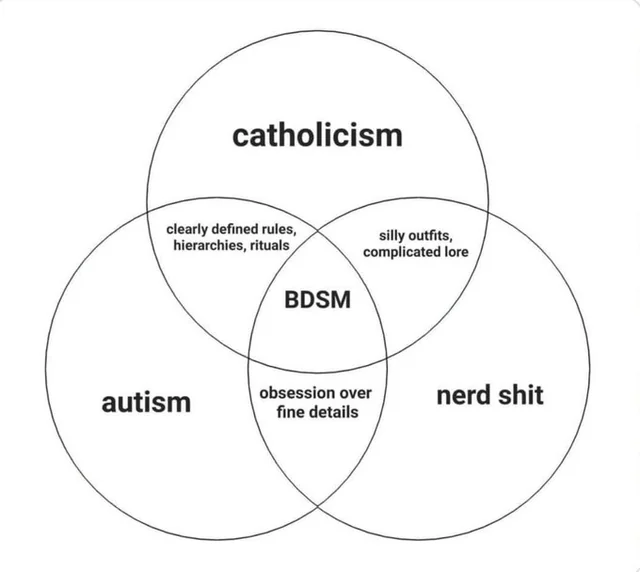
| I am this entire image. |
We're almost done with this series, but before we go, I still have one post left in the tank - one devoted to things I personally find cool about Gor as a setting, now that all the theoretical stuff is out of the way. Until then, I wish you well!
Friday, January 10, 2025
Friday Encounter: Don't Feed the Bears
After the PCs make camp and consume their rations, wild animals are attracted to their location. This might happen while they're asleep, in which case anyone on watch will be the first to deal with it, potentially alone - you are keeping track of who's on watch, right? Alternatively, it could happen while the PCs are eating, and now they have to deal with an incursion while they're trying to settle in, which could catch them unawares and underprepared. You can even use this encounter to punish a party that fails to follow proper precautions when setting up camp like keeping food uncovered and accessible. If you have something like this happen to your PCs, your players might see it as a wakeup call to pay closer attention to these matters going forward!
Exactly what shows up is up to you - or your random wildlife encounter tables. There are a number of compelling options here. The most obvious, of course, is bears, as anyone who's ever gone camping (or has read Tales of the Grotesque and Dungeonesque) can tell you. They have several advantages - they're easily attracted to the scent of food, they're dangerous if provoked, and they can make for a tense encounter. This can be a combat encounter, but a more realistic scenario, where the bear doesn't attack on sight and the PCs have to remain still and avoid any sudden movements or loud noises so as not to provoke it, can be just as fun. In a fantasy or sci-fi setting, you even have the option to make it something worse than a bear.
However, it's also valuable to consider other ways curious beasts can impact the party. Even if small animals like rats or raccoons don't pose an obvious threat, they can still make noise (such as by rustling underbrush or dry leaves) that can alert more apparent dangers. If these creatures make off with the food, they could deplete the party's resources, something that could prove just as dangerous in the long run. They may even decide that it's worth following the party if they're a consistent food source, which could prolong the problem, and the PCs might not even know it at first until they notice food keeps going missing and it's suddenly harder to be stealthy. In a more fantastic setting, beings that can speak with animals, like elves or druids, might use these scavengers as a means to spy on the party and report on their doings. There's a lot of possibilities here, which goes to show you how the things they teach you about when going into the outdoors can be mined for exciting gameplay opportunities.
Wednesday, January 8, 2025
Saga of the Ortegids: Dials and Inspiration
The Saga of the Ortegids is intended as a dialed setting - that is, there are several main streams of inspiration behind it that influence its tone, look, and feel. A DM interested in fine-tuning the details and creating a mood that seems right to them can turn these "dials" up or down, exaggerating or downplaying certain elements to make the setting their own. Trey at Sorcerer's Skull explores a similar paradigm with Star Wars - identifying the main sources of influence as swashbuckling, classic science fiction, Orientalism, and mid-century Americana, and how giving these aspects more or less focus could create a setting still identifiably influenced by Star Wars but with its own distinct flavor. This is a vast oversimplification of Trey's point, but it shaped how I think about Saga of the Ortegids and how it could be approached.
The three major dials of the setting are:
1. Western Dragon Warrior Art
![]() |
| These are the same people - You probably didn't need me to tell you that. |
I've seen people describe this art as "a bastardization of Toriyama's art to appeal to western audiences," but that's quite dismissive of the hard work of the artists, and to the audiences they captivated. It also ignores the fact that in Japan, Toriyama's art is considered much less integral to the Dragon Quest experience than it is in the west; there have been numerous projects, including the long-running manga The Adventures of Dai, which he was not involved with at all. What's very interesting to me is that elements of Toriyama's original designs actually crop up quite frequently in this art - the artists clearly knew what they were doing, and wanted to translate the imagery of the series to a different visual style. They could easily have thrown some unrelated fantasy art on the cover, but they didn’t. They used artists who had played the games, or at least saw the original concept art, and reproduced the designs faithfully.
This is, admittedly, a hard dial to turn up. It mostly relies on these images being in the minds of the people at the table, and it's hard to control that unless you use visual aids and handouts (I don't). I would suggest looking at this art as a way to get in the mood. Lean into its visual tropes in your descriptions - shadowy taverns, horned helmets, Moebius-like tall grassy plains. The first two games rewrote all the dialogue in Shakespearean speech, so throwing around some Elizabethan pronouns might help evoke this mood if your players won't kill you for it. Alternatively, you can turn down this dial if you'd rather have a world that looks and feels like Toriyama's depictions, emphasizing the anime influences of the world.
Inspirational Reading: Nintendo Power circa 1989; NES manuals and strategy guides; Clyde Caldwell and Larry Elmore art has the same vibe. If you hate yourself you can watch the two Captain N episodes that adapted Dragon Warrior.
2. Norse and Germanic Sagas
The thought that kicked off this whole experiment in the first place was the idle musing I had that the Erdrick Trilogy is an Icelandic saga. I don't know how intentional this was - given the trilogy's use of Norse motifs, it's certainly possible - but structurally and thematically, there are very strong similarities. The conceit of the first three Dragon Quest games is that they take place in the same world(s), generations apart from one another, all following a single lineage of heroes. A constant recurring theme is living up to one's legacy - protagonists of one game must prove their mettle by weighing their deeds against those of their ancestors, which are shown on-screen in other games in the series. Even though DQ3 is the first game chronologically, it too plays with this, as your NPC father and his heroic exploits are constantly mentioned.
This is the same throughline found in Norse sagas, which tend to be genealogical in nature, recounting several successive generations of a given clan and having the actions of one hero resonate through the ages to impact their descendants for good or ill. It grounds the trilogy in the context of a mythic tradition, and that tradition can easily be used to provide color and texture to the setting.
More superficially, I'd be remiss if I didn't point out that the plot of the original Dragon Quest starts with a warrior arriving in the court of a foreign king, seeking to prove himself so that he can be trusted with dealing with the king's problems with a marauding monster that has broken into his castle. There's a kidnapped princess, which immediately casts things in a fairy-tale lens to most people, but it's also not hard to see the similarities to Beowulf.
If you wanted to play up the higher literary influences on the setting, you could simply throw around more runestones and longboats, but to go a little deeper than that, you could make reference to themes of fate (even better if you call it wyrd) and cite legendary heroes of the past, who may or may not be related to the PCs. Use of the word "hwaet" is optional. Turn this dial down, and you have a setting that pays greater homage to pulp fiction, emphasizing action and exotic locales.
Inspirational Reading: Beowulf; The Saga of the Volsungs; the Kalevala.
3. Sword and Sorcery Fiction
In my previous post, I talked about how Conan the Barbarian does a better job in bringing the basic story beats of Dragon Quest V to the big screen than that game's official movie adaptation does. But it goes both ways, too. Here's another revelation I had - Dragon Quest III is the closest a video game has ever come to capturing Robert E. Howard's Hyborian Age.
Yes, I know about Age of Conan and Exiles and all the other official Hyborian Age games, but a significant portion of these games are drawn from the aesthetics of the movies. And I've come to realize on my replay that DQ3 feels very much like Howard's original stories, before Milius and Schwarzenegger's interpretations colored the public perception. As I've discussed on the blog before, the setting of DQ3 is very much a History's Greatest Hits setting, taking an Earth-like map but populating it with areas based on very different eras of history. On your adventure, you encounter characters who appear to be stand-ins for Cleopatra, Henry the Navigator, Galileo, Simon Bolivar(!), and Queen Himiko, among others. Does it make sense for all these people, and the settings they are grounded in, to be around at the same time? Absolutely not, but the game does not care. Much like Howard, it's more concerned with creating a fun venue to have exotic globe-trotting adventures than maintaining internal coherency.
Furthermore, the protagonist of DQ3 can easily be imagined as a Conan figure. Spoilers for a 40-year-old game to follow (for the record, the recent HD remakes did not even bother to try hiding this any more): at the third act of the game, you travel from one world to another, seemingly located on the inside of a hollow planet, which turns out to be the setting of the original two games. By the end of the game, it's become clear that you are in fact the same legendary hero who was mentioned in the first two games and set the legacy their heroes will follow. But this also means that DQ3 is about a hero leaving their homeland, having adventures that span the globe, and then settling in a foreign land to become a figure of legend, much like how Conan left Cimmeria and became the king of Aquilonia.
Also, there's a female pirate captain, and by picking the right dialogue options you can apparently seduce her. I sincerely doubt this was a deliberate nod to Queen of the Black Coast, but it makes for a fortuitous coincidence. The antagonists of Dragon Quest II are a doomsday cult that worships a sinister reptilian god, so there's that.
Luckily, there's a rich vein of imagery associated with pulp sword-and-sorcery stories you can tap into to play up this dial. For more superficial examples, use fewer historical names in favor of imagined two-syllable constructions (bonus points if hyphenated), put in some slave girls, giant snakes, and carnivorous and/or winged apes (both of which, incidentally, appear in the Erdrick Trilogy), and use the term "mighty thews" at least once. Or emphasize the sweeping scope of adventure and the exotic locales it takes place in, and provide the party with plenty of examples to cause mayhem. Turning this dial down will result in a more "highbrow" Saga of the Ortegids, emphasizing its roots in mythic traditions.
Inspirational Reading: Conan the Barbarian (books, comics, and films); Thongor of Lemuria; Fafhrd and the Grey Mouser; that one sadly short-lived Beowulf comic DC did where Grendel kills Satan for favoring Dracula over him.
Thursday, December 19, 2024
It's Not The Destination
![]() |
| Trivia: the one time this part made it to the screen, Stadtler and Waldorf were involved. Look it up! |
Tuesday, April 16, 2024
History's Greatest Hits
I've posted a fair amount on this blog about the Dragon Quest series, and in particular Dragon Quest III, a game that I grew up with and which influenced my approach to DMing. I've always been intending to go back to the game and see how well it holds up from when I was a kid, and I've finally gotten around to doing it. It's definitely made me more interested in pursuing the rest of the series, both out of personal interest and to mine it for gameable ideas, but for now, I'm starting with the one I remember. In doing so, I noticed one thing interesting about the game and its world, and something that I've seen in quite a bit of fantasy worldbuilding.
See, the world of DQ3 is recognizably a malformed, rotated version of our Earth. The continents are largely recognizable, and there are areas based on real-world regions located where you'd expect them to be. However, while the geography matches up, the history not so much. The game plays it fast and loose in respect to historical accuracy, and it's not afraid to mix and match different eras in its inspiration. The first town you go to after leaving your homeland is noticeably based on imperial Rome, complete with colosseum. But across the sea is a region that recalls ancient Egypt, where you delve into an ancient pyramid (of course) to retrieve a magic key that allows you to access a town that corresponds to Portugal during the Age of Sail, and from there you get a ship you can take to areas reminescent of feudal Japan, medieval Scotland, and a town of settlers on the continent equivalent to North America. It's all there in the same world, at the same time, and nobody questions it - it just is.It's an approach to worldbuilding I've dubbed a History's Greatest Hits setting, and DQ3 is far from the first time I've seen it. There are plenty of settings out there that flippantly and shamelessly crib from real-world history, mashing together the fun parts of different eras into a single world. Probably the most famous literary example is Robert E. Howard's Hyborian Age, which grew out of him wanting to write historical swashbuckling adventure, but not wanting to tie himself down to accurately depicting any one era - it's a setting where Conan can fight knights in one story and Egyptians in the next without anyone batting an eye. The Known World of Mystara has also often been described this way, with its Byzantines, Mongols, Vikings, and Arabs all a stone's throw from one another, although it's perhaps not quite as drastic with how it's willing to stretch the limits of contemporaneity. Warhammer Fantasy, although its baseline is somewhere around the 1500s, still has a Renaissance-era Holy Roman Empire with a (French-speaking) Arthurian England to its west and marauding Norsemen to the north. And, yes, my own Lunar Lands is no stranger to this phenonmenon either, with regions based on Dark Ages Scotland, colonial Mexico, Renaissance Italy, the Polish-Lithuanian Commonwealth, and the Abbasid Caliphate all coexisting, to name a few.
![]() |
| Deadliest Warrior |
They're also helping in providing touch points to players and readers to understand the setting - not everyone is willing to sift through an eighty-page history of the Great War between the Zornaphian Satrapies and the Oligarchs of Runos, but if you pitch it as "it's basically ancient Greece," say, people will instantly have a good idea of what things look like, how people act, and what they can do. They're easy to handle on the writer/DM side of things too, since a lot of the worldbuilding is already filled in for you; the most you might have to do is throw in a few points of divergence to make things interesting ("It's like the Aztec Empire, but with the dueling culture of 18th century Prussia!") or to see how things can fit together ("Why would there be Landsknechts on the border with Mongols anyway?"). Plus, there's just some people who recognize that seeing a samurai and a musketeer team up to fight cavemen is just inherently kind of neat. I don't think it's any surprise that so many fantasy writers fall back on settings like these, and there's almost certainly many examples out there that I missed.