Our gazetteer of
the world(s) of
The Saga of the Ortegids is pretty much complete. Over the last few months, I've summarized every major region in the first three
Dragon Quest games and explored their potential for TRPG scenarios. However, just today I started thinking about one small area I didn't pay any heed to before, but one that just might be more interesting than I thought.
In Dragon Quest III, upon crossing through the Pit of Giaga, you come out on a small island in the western gulf of Alefgard, directly across from Tantegel. This is the only location in this part of the game that has no counterpart in Dragon Quest I, likely because there's no sea travel in that game. On it is a small, unnamed port - there are no shops or inns here, so it's likely a small fishing village rather than a regional trade center. It's really just there to give you access to a ship while in Torland, and for this reason I overlooked it in my discussion of Alefgard.
However, one of the NPCs there asks the party if they've come from "the upper world," which indicates that the people of Torland are familiar with the existence of Erdland. To recap the cosmology I'm using for The Saga of the Ortegids, I have chosen - in part because it provides for more interesting gaming opportunities - to interpret Torland as literally being inside of a hollow Erdland, with the Pit of Giaga being an actual, physical pit connecting the two surfaces. Interestingly, the Western fandom tends to interpret the Pit of Giaga as being a portal and the worlds as separate universes, but the Japanese fandom is more equivocal about it. In any case, for Saga, it's a physical pit - which ties into my next point.
Torland (unlike Erdland) has no consistent day-night cycle and is shown to be in a state of constant night before the Sphere of Light is used for the first time in DQ3. Furthermore, the Dragonlord stealing the Sphere in DQ1 is sometimes said to cause an unending night, depending on what source you're reading (this could be metaphorical, but for me it's not). Under my interpretation, this implies that Torland had no natural light source until the Sphere of Light created one, being the inside of a hollow planet and all. So far, everything is interally consistent.

But then I realized that if the Pit of Giaga physically separates Erdland from Torland, if there's a big hole in the ground in Erdland, there must conversely be a big hole in the sky in Torland. And we do know that Erdland has a sun. Before the Sphere of Light was used, this island below the Pit of Giaga must have been the only place in Torland to receive natural light - that is, what was able to stream through the Pit when the sun was overhead.
This likely wouldn't be enough light to illuminate
all of Torland on a regular basis, but it
would mean that this one island would receive direct sunlight for part of the day. In an otherwise lightless world, this would no doubt have a significant effect on the local culture. Perhaps the locals of this island, even if they know of the
existence of an upper world, don't realize how a natural sun really works, and view this light as a divine phenomenon. This would transform
the Isle of the Sun, as I've called it, into a natural choice for a holy site, with cults springing up around the light and adherents making pilgrimages to witness it.
With this in mind, perhaps the port we see in DQ3 isn't the only settlement on the island - perhaps there is another city that serves as the center of this sun cult, and we just don't see it in-game because there was nothing useful for gameplay or narrative purposes there. Given the Norse vibes of Torland in general and Alefgard in particular, let's call this city Sollenborg. While ostensibly a subject of the Alefgardic crown, it would be an autonomous power headed by a cult worshiping the sun, with the priesthood holding local positions of authority.
 |
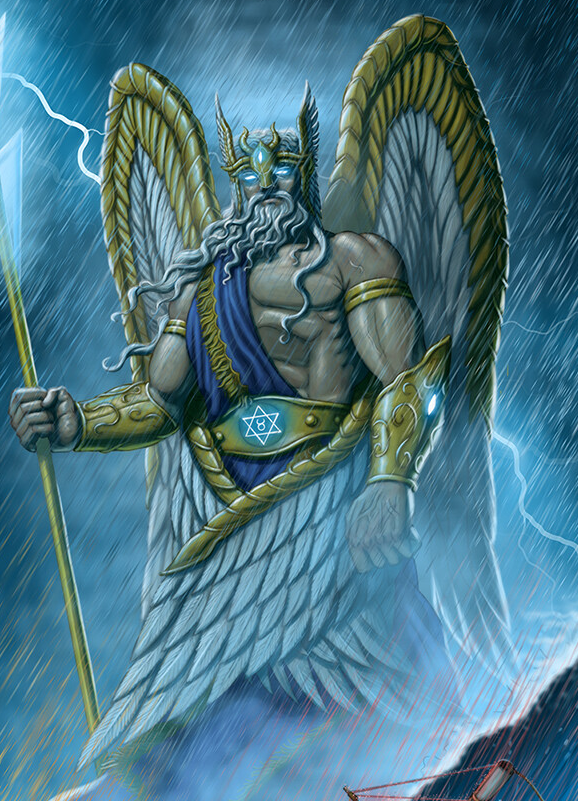
| Art by Noah Bradley |
In a campaign set in Torland before the events of DQ3, this city could be a curiosity for the party to investigate, or a regional power given its apparent blessed nature. It would also offer another religion to add to the worldbuilding of the setting. Also, one of the easiest ways to kill vampires in a pre-sun Torland. I also find it interesting to think about how even in a magical fantasy world, there would still be perfectly natural phenomena that are misinterpreted as miracles.
I also think it's interesting to consider what might happen to Sollenborg after the events of DQ3. Surely the sun cult would lose quite a bit of its authority with the Sphere of Light providing constant sunlight. This could lead to a crisis of faith for its adherents - and perhaps the more worldly of the cult's authorities, fearful of losing power, might be jealous of what the Sphere provides and covet it for themselves. You could also probably tell an interesting side-story about how the sun cult would handle the Dragonlord's theft of the Sphere. If Alefgard was suddenly deprived of its sunlight, the cult would have something unique to offer the people, who would surely grow desperate in such a time.