Showing posts with label literature. Show all posts

Wednesday, January 14, 2026

Saga of the Ortegids: Appendix N

If you haven't read the
Nintendo Power handbook,
do yourself a favor.
I know the Year of the Barbarian has run on longer than a year at this point, but I haven't had much time with which to sit down and write this post. In any case, I've put together an Appendix N for The Saga of the Ortegids, compiling a list of works that carry the same sort of feel I'm shooting for in my personal vision of the setting, or otherwise are useful as influences. See also this post on the "dials" of the setting - certain influences can be played up or down to convey different feels.

The Sacred Texts
These are to be considered in broad strokes canon to Saga.
  • Dragon Warrior (1989), Dragon Warrior II (1990), and Dragon Warrior III (1992) (NES)
    • Specifically the NES versions, including art and literature included in game manuals.
  • The promotional art of Katsuya Terada (1963-) and Kensuke Suzuki (1964-2018)
    • This art is the reason this project exists. If Dragon Quest canon is "Akira Toriyama's Dragon Quest," then The Saga of the Ortegids is "Katsuya Terada's Dragon Warrior."

Artists
  • John Buscema (1927-2002)
  • Clyde Caldwell (1948-)
  • Larry Elmore (1948-)
  • Ron Embleton (1930-1988)
  • Frank Frazetta (1928-2010)
  • Greg (1939-2024) and Tim Hildebrandt (1939-2006)
  • John Howe (1957-)
  • Ephraim Moses Lilien (1874 - 1925)
  • Moebius (1938-2012)
  • Earl Norem (1923-2015)
  • Boris Vallejo (1941-)

Comics
  • 300 (1998)
  • Arak: Son of Thunder (1981-1985)
  • Beowulf: Dragon Slayer (1975-1976)
  • Claw the Unconquered  (1975-1978)
  • Marvel's Conan the Barbarian (1970-1993)
  • Dragon Quest: The Mark of Erdrick (1991-1997)
    • Not canon to Saga, in large part because it wasn't translated until last year, but a good example of how you can expand on the lore of the Erdrick Trilogy while taking it in a grittier direction.
  • Red Sonja (1977-1983)
  • The Savage Sword of Conan (1974-1995)
  • Vinland Saga (2005-2025)

Film and Television
  • The 13th Warrior (1999)
  • The Beastmaster (1982)
  • Captain N: The Game Master (1989-1991) - S1E7 "Three Men and a Dragon" and S2E10 "The Trojan Dragon"
    • Thankfully not canon to Saga, but it does at least give you a sense of how Western audiences perceived Dragon Quest when it first came out.
  • Cleopatra (1963)
  • Conan the Barbarian (1982) and Conan the Destroyer (1984)
  • Deathstalker series (1983-1991)
  • Dragonheart (1996)
  • Excalibur (1981)
  • Fire and Ice (1983)
  • Gladiator (2000)
  • Hawk the Slayer (1980)
  • Hercules: The Legendary Journeys (1995-1999) and Xena: Warrior Princess (1995-2001)
  • House of David (2025)
  • Ladyhawke (1985)
  • Legend (1985)
  • The Legend of Zelda (1989)
  • Ralph Bakshi's The Lord of the Rings (1978)
  • The Northman (2022)
  • The Odyssey (1997)
  • Primal (2019-)
  • Red Sonja (1985)
  • Robin Hood: Prince of Thieves (1991)
  • Samurai Jack (2001-2004; 2017)
  • The Scorpion King (2002)
  • The Ten Commandments (1956)
  • The Thief of Baghdad (1940)
  • Vikings (2013-2021)
  • Almost anything by Ray Harryhausen (1920-2013)
    • Mostly his sword-and-sandal output, but even something like One Million Years BC could be taking place in the Worldforest.

Literature
  • Beowulf
  • Lin Carter (1930-1988); various
  • The Epic of Gilgamesh
  • Ferdowsi; The Shahnameh
  • Gustave Flaubert; Salammbo (1862)
  • Homer; The Illiad and The Odyssey
  • Robert E. Howard (1906-1936); various
  • Elias Lonrott; The Kalevala (1835)
  • Fritz Leiber (1910-1992); various
  • The Old Testament
  • Orlando Furioso
  • The Saga of the Volsungs
    • Yes, that's where the name came from.
  • JRR Tolkien; The Hobbit (1937) and The Lord of the Rings (1954-1955)
  • Valmiki; The Ramayana
  • Virgil; The Aeneid
  • Vyasa; The Mahabharata
  • Wu Cheng'en; Journey to the West (1592)

Video Games
All entries include North American promotional art and manual materials, if applicable.
  • Assassin's Creed series (2007-)
  • Dragon Warrior I & II (2000) and Dragon Warrior III (2001; Game Boy Color)
    • This is after the series started embracing its ties to anime in the international market, but they are in my opinion the best versions of the games, and some content added for these releases found their way into Saga.
  • Dragon Warrior IV (1992; NES)
  • Faxanadu (1989; NES)
  • Final Fantasy (1990; NES)
  • The Legend of Zelda (1987) and Zelda II: The Adventure of Link (1988) (NES)

Wednesday, February 5, 2025

In Defense of Gor, Part 4: Stuff I Like

Welcome, everyone, to the fourth and (most likely) final installment of my series on why the Gor novels deserve a look if you're interested in worldbuilding. We've discussed why the series isn't as bad as people make it out to be, the influence it had on the early TRPG scene, and why the setting works so well for gaming. To finish us out, I intend to take a more personal look at the world of Gor, and go over a few aspects of the setting I find interesting. The stuff I couldn't really fit into my other posts, but which I enjoy all the same.

You might find some of these things cool too. Or you might not. You might even find other parts of the setting more interesting - your perspective is unique, and all your own. I encourage you to peruse the rich lore of the novels; with 59 years in print and 38 books, there's bound to be something that interests or inspires you. But these are mine.

Technology Laws

In my personal opinion, Gor is the only setting to do Medieval Stasis right. For those unaware, Medieval Stasis is a concept in worldbuilding describing how a setting can have an in-universe history stretching back centuries, yet never develops modern technology in order to keep the medieval fantasy feel. Various settings over the years have come up with their own answers to this, ranging from "magic makes technology unnecessary" to "technology just doesn't work on this world" - I, personally, just go with "the stories I am telling in this setting happen to take place during its preindustrial era." I don't think you really need an excuse to have medieval technology and society in your setting, considering our world had such things for hundreds of years. However, if one does need an excuse, Gor handles this concept the best out of every setting I've seen.

Gor, as a planet, exists simultaneously with our Earth in the modern era, just on the other side of the sun. However, the people there have technology around the level of Earth's Iron Age, with some later innovations like crossbows. Although it's technically a sword and planet story, I find the feel a lot closer to sword and sorcery - or perhaps sword and sandal - because of the relative lack of advanced technology. However, the possibility for advanced technology is there - but it's limited by the Priest-Kings.

Art by Chris Achileos
Who are the Priest-Kings, you might ask? If I am to spoil a decades-old book, the Priest-Kings are in fact a race of hyper-intelligent insects from another planet who have set up Gor as something like a wildlife preserve as part of a mysterious experiment. Humans from various cultures and eras have been brought to the planet throughout history, and the Priest-Kings take precautions to ensure their ways remain consistent. This includes enforcing strict regulations on technology - things like firearms, explosives, communication devices, and full-body plate armor are prohibited. Interestingly, this doesn't encompass all modern technology. Goreans have light bulbs, for instance, but they're prohibitively expensive for most people, and culturally seen as weird. They even have some inventions more advanced than those on Earth, such as portable translators. But most modern technology as we would think about it is banned.

If you're wondering how the Priest-Kings go about doing this, it's quite simple. Most Goreans don't know that they're alien bug people at all. They've established a cult around themselves to posit themselves as gods, and insist that technology is to be shunned as witchcraft. They themselves have technology the Goreans don't have access to, including spaceships, and use it to work "miracles," including causing people who invent banned technology to spontaneously combust. That tends to get the impression across.

Some might recognize this as quite similar to Forgotten Realms, in which the Harpers are an international organization that suppresses societal and technological progress by assassinating anyone who disturbs the status quo. The difference is that the Priest-Kings are actually portrayed as having questionable motives. They're actively suppressing progress in the name of their own ends, be it research or something more nefarious. This is an easier sell to me than accepting the Harpers as good guys in spite of everything they do. One could even conceive of a campaign in which the Priest-Kings are set up as the villains for this, and the PCs are rebelling against them. I find this answer does a good job of answering why technology doesn't advance, grounding it from a conceivable in-universe explanation that - better yet - offers compelling opportunities for storytelling.

Furthermore, if technology is illegal but not impossible, this creates even more opportunities. You could easily pull an Expedition to the Barrier Peaks and have off-world technology take the place of magic items in a Gorean campaign. Goreans would likely react to, say, a laser gun or a communicator as enchanted artifacts, which could help introduce what functions mechanically as magic into a world where actual magic doesn't exist. In addition, the party would likely have to hide these items from the authorities, lest they be reported as witches, which presents opportunities for conflict. This is actually where I would deviate from the books a little - instead of having the Priest-Kings be able to spy remotely on people and immolate them at will, if I was running a Gorean campaign, I would have "witches" be hunted down and persecuted by the people of Gor. That would make it easier for PCs with such items to avoid undue attention, and could allow for more human drama if the enemies they stand to make from using technology are people they can see and interact with directly.

Kurii

In terms of the roles they play in the story, the Kurii are essentially Gor's equivalent of orcs - a monstrous race that usually appear as antagonists and enemies of Gorean society. However, they deviate from the stereotypical orc in a number of ways, and those ways provide some insight into how one can shake up fantasy tropes to make them feel more fresh.

First of all, they are only orc equivalents in terms of the role they play in the story. Visually, they have more in common with Wookiees than anything else, standing seven feet tall and covered in thick fur, with claws and fangs. We've seen plenty of settings where the main bad guy race is one of tusked green-skinned brutes, but how many can you think of where the heroes fight armies of Bigfeet?

Secondly, in keeping with its attention to detail in worldbuilding, the series goes into great depth about the society, culture, and biology of the Kurii. Like most portrayals of orcs, they are a barbaric warrior race that enjoy fighting and believe that might makes right; they engage in ritualistic combat in order to be allowed the right to mate. They also see humans as a food source, and their word for "human" translates literally to "meat animal."

Where things get interesting is in their biology. They are more active at night, they go into a frenzy at the scent of blood like sharks, and they store food in a second stomach to digest it later, meaning they don't need to carry food while traveling. They also have four sexes, although two of them - Dominant and Nondominant - seem to be more akin to genders and have more of an impact on their place in society than their role in reproduction. Then they have another sex called a Blood-Nurser, which is akin to a cross between a queen insect and a biological incubator; an Egg-Carrier, after being fertilized by a Dominant, implants that egg in an immobile Blood-Nurser to gestate until the baby forcibly eats its way out of the Blood-Nurser. All in all, the Kurii truly feel like another species, and not just humans with funny heads.

What's perhaps most interesting of all, though, is that despite their warlike ways, Kurii are not merely dumb brutes that exist to raid and prey on civilization. They are, in fact, an advanced spacefaring race that are in a state of cold war with the Priest-Kings. Many Kurii on Gor are actually secret agents working to undermine Gorean society and overthrow the Priest-Kings, though others have gone native and have no ulterior motives. They don't just pull out guns and shoot everyone because they too are subject to the Priest-Kings' technology laws and will be persecuted for them, so they use the same limited technology Goreans do. It certainly subverts expectations if a setting's equivalent of orcs are some of the more advanced races around (ironic, because that's what they were in Tolkien, but I digress), and if they have bigger motives than just wanton destruction. Those motives also help to justify their role as villains. They aren't inherently evil, and in fact some Kurii even develop respect for the protagonists of the stories, but they're on the other side of a war most Goreans don't even know they're fighting.

Exotics

Gor is a humanocentric setting, but other races do exist. The aforementioned Kurii and the Urt People, for instance, are sapient nonhuman species, but they don't appear to play a very big part in mainstream society. Most Goreans of most cultures are human. However, the books do make occasional references to so-called Exotics. They don't go into much detail about them, which is unfortunate, but the information we do get is quite interesting.

An Exotic is a slave that possesses some unusual quality. The term is a broad one, and it isn't limited to physical characteristics. One example given is that of a female slave who was raised not knowing about the existence of men, only having been exposed to women. But the term also describes slaves specifically bred to have unusual physical features. These traits can be cosmetic, like unusually large earlobes, or more unusual and stretching the limits of plausible human biology, like having venomous saliva.

I find this concept quite interesting, and it could certainly be used to add additional races to a setting that doesn't have them. Want to play a dwarf? How about someone with horns? Just keep whatever stats are relevant and flavor them as Exotics bred for those traits. It could also be a good excuse to break out your favorite mutation table. Even those Exotics that don't possess strange physical features could present interesting opportunities to roleplay as a character with a very unusual outlook on the world, shaped by their upbringing to serve as a curiosity.

No one can get kaiila right.
Wagon People

Those of you with a good memory might remember that what kicked off this series in the first place was me kitbashing some miniatures to make an army of Wagon People for something like Kings of War. I started on that a while back, and I do intend to return to it. My motivation goes beyond simply having the appropriate parts on hand, though. Out of all the cultures detailed in the series, the Wagon People might be my favorite.

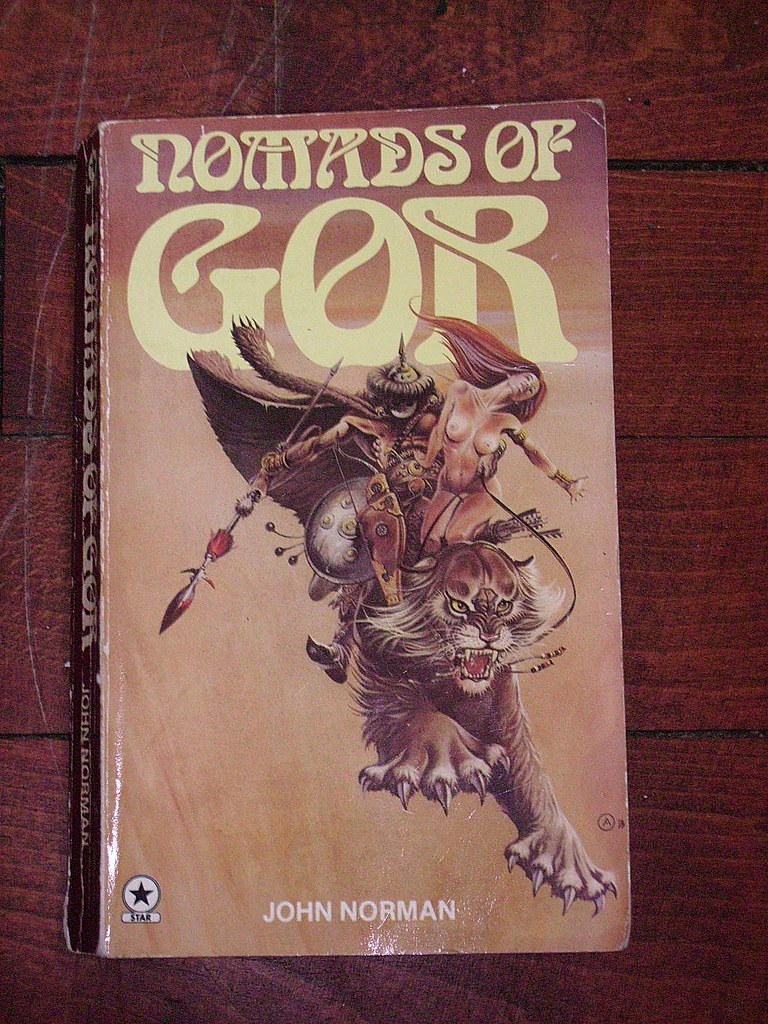
The Wagon People play an extensive role in the fourth book in the series, 1969's Nomads of Gor. Because so much of the book focuses on them, we know quite a bit about their society and culture, which provides ample source material for gaming. Quite fortuitously for my project, we know what weapons and tactics they use, how their military units are organized, and even their heraldry - it all reminds me of the information found in wargaming materials (or even how humanoid armies were organized in the old Monster Manuals), and gets back to my point about how John Norman totally would've been involved with tabletop gaming had he been born a decade later. But besides being easily adaptable to a gaming context, the Wagon People are just cool.

As nomadic raiders and pastoralists, they fill a role similar to the Mongols; indeed, they seem to be largely based on them. They travel in tents on wheeled platforms similar to yurts, and their armies consist almost entirely of cavalry. However, while many cultures introduced later in the series have details borrowed heavily from their real-life counterparts, Norman did not get so lazy with the Wagon People, and they have many quirks unique to them.

They use an elaborate system of facial tattoos to indicate rank in society. They don't eat vegetables (meat, dairy, and fruits are okay) because they have a cultural taboo against eating anything that touches dirt. They accept certain outsiders as welcome guests and allow them to trade with them, but in order to receive such status (marked by a brand on the forearm), one must present themselves to the Wagon People offering gifts, and if they aren't impressed they might just kill you. Because they trust their memory more than the written word, they have people tasked with memorizing the calendar and recounting the passage of years - which are named after important events that happened in them, and are counted from snowfall to snowfall, so they don't have a fixed length. I love these sorts of little cultural details that give you a window into how these people think, and help make their societies feel more real, fleshed out, and lived-in.

Also, perhaps more usefully to DMs, the Wagon People are a good example of how you can vary up a culture based on a real-life one by mixing and matching details from other cultures. Although they're mostly based on the Mongols, they don't feel like Mongols, but like something all their own. A lot of the details are either completely invented or taken from other sources - they have skalds, for instance, and some have noted that they appear to be partially based on gauchos, as they live on the plains and use bolas and throwing knives. If this is the case, it showcases how the New World has just as many interesting cultures as the Old, and how even for a medieval fantasy setting one need not limit themselves to the medieval era when it comes to inspiration. As someone with a culture based on Mexico, I should know.

Finally, while most Goreans ride either giant birds or dinosaurs, the Wagon People ride a creature called a kaiila. Most renditions that I've seen draw them as horses with fangs. This is coward behavior. To me, the way they're described, with long necks, silky hair, and clawed feet, makes them sound much more like carnivorous killer death-llamas. I shouldn't need to explain why Mongols with bolas on carnivorous killer death-llamas are cool.

Verticality

We exist in three-dimensional space. That statement might seem trivially obvious on the surface, but it's something a lot of games forget. Because of the limitations of depicting it on maps, and because of the fact that we rarely have to interact with our world on a Z axis unless we live in a big city, not a lot of maps truly make use of three-dimensional space. Adding towers, chasms, tall ceilings, and the like can really liven up your dungeon design, quite literally giving the players a new dimension to explore, and adding new challenges to how they approach the world around them. For instance, they might need to scale a sharp cliff in order to get from one level to another, or balconies on one level could overlook rooms on another, providing opportunities for ambush. I think it's something a lot of people forget, since we're so used to dungeons being stacks of simple floors on top of one another. But looking at real-life cave maps shows how complex an enclosed vertical space can really be.

Gor has verticality baked into its setting, and because of that, it serves as a good illustration of what vertical design can do for a game. It achieves this through two ways - first, through the ready availability of flying mounts (one can buy a tarn for a single gold tarn disc, although that's "more than many common laborers will earn in a year"), giving characters a means to maneuver up and down, and secondly, through the use of vertical space in the design of its locations. Many large Gorean cities are complex multi-leveled affairs; buildings consist of tall towers, with different businesses and facilities on different levels, and bridges spanning between them. One could navigate a city not only through the cardinal directions, but also moving up or down, and discover new things. Mapping a Gorean city would be quite similar to mapping a dungeon, and could provide just as many opportunities for exploration. It would also make chases through the streets more exciting, as PCs would have to move between levels - or avoid falls off narrow bridges, particularly because Goreans think railings are for cowards. All in all, it's food for thought that presents an interesting perspective for designing dungeons and other spaces.

He just wants to discuss philosophy. 
Spider People

I love these guys. The Spider People don't really do a whole lot in the series. There's one brief encounter with them all the way back in Tarnsman of Gor, and they kind of get forgotten about afterward. But the concept is so batshit insane that I have to mention it.

The Spider People are another sapient race on Gor, dwelling in the swamps north of the city of Ar. With a name like that, your mind might conjure the image of driders. They're part spider, part person, right? No - Spider People are literally just giant spiders. They're "people" insofar as they're capable of rational thought and speech, but there's nothing anthropomorphic about them. Considering giant spiders are a staple of dungeons, having one of them turn out to be a friendly, personable NPC could be a fun way to subvert your players' expectations.

What's also quite interesting is their culture. Although the Spider People are sapient, the people of Ar hunt them for sport and to harvest their webs. They could easily wipe them out if they wanted to, but keep a small population alive to have a steady source of silk. The Spider People are completely okay with this and do nothing about it, because they have such a strong taboo against violence that they will not do anything to harm another sapient being, even in self-defense. If a person wants to kill them, they'll just assume they have a good reason to and let it happen. This line of thinking is so alien that it stands as a great example of Norman's approach to worldbuilding, making his cultures and races feel truly distinct from humanity, and avoiding Flintstonism.

I hoped you enjoyed this look at the world of Gor. Hopefully, you came away from it with a better idea of what the setting is, how it's informed gaming, and how it could continue to do so. For all the books' flaws, I truly do find the series to be up there with some of the most fascinating worldbuilding projects put to paper, and I'm sure many of its ideas would appeal to DMs.

This will probably be the last post I write about Gor. There's so much more I could talk about, but Luther has already catalogued everything far better and more extensively than I ever could. I might make some more posts here and there if the mood strikes me, but for those interested in looking into the setting more, I encourage you to click around his site, or even to seek out the books if you truly are interested. Until then, I'll be continuing to post on other settings, and intend to get back to The Saga of the Ortegids. See you then!

Tuesday, January 21, 2025

In Defense of Gor, Part 3: Gaming on Gor

Now that we've gotten the disclaimers out of the way and taken a look at the history of Gorean influences on the gaming scene, we can finally get to the stuff I've been wanting to talk about. We now know that many individuals in the early TRPG community read the Gor novels and used elements of the series to influence gaming materials. But is there any particular reason why Gor was used as an influence by so many gamers, as opposed to any other novel? I, personally, think there's something to that. Looking deeper into the setting, we can see that the way it's set up makes it very easy to facilitate RPG campaigns, especially those in the old-school milieu.

In fact, after reviewing these things, I am convinced that, had he been born ten years later, John Norman would likely have been an early contributor to the RPG industry. To date, the only official Gor RPG is Postmortem Studios's Tales of Gor, originally published in 2017. We have no reason to believe that Norman ever played an RPG, or even knows what one is. But he was an advocate of roleplaying as a activity in Imaginative Sex, citing it as a natural behavior that one should not be afraid or ashamed of engaging in, and as a safe outlet for desires that would be unethical or impossible in real life. Yes, he's talking about a different kind of roleplaying game here, but it isn't hard to see how he might be intrigued by tabletop gaming if he had been in the circles where it first arose. For that matter, the setting he created shares many traits in common with some of gaming's most enduring settings, as well as the ideals elaborated by those writing on the subject.

Before we begin, though, I would like to include an addendum to my last post. White Dwarf, back when it was a general gaming magazine and not solely a Games Workshop-related publication, used to run a column called Fiend Factory, listing new monsters for D&D, often submitted by readers. Many of those entries would later be collected in the Fiend Folio, making that book and its monsters a part of the British old-school gaming tradition. Issue 49 features a Fiend Factory article themed around insects, and includes stats for the golden beetle, a creature prominently featured in 1968's Priest-Kings of Gor. The entry, submitted by Steven Quayle, specifically lists the novel as its source material. Once again, we have evidence that many gamers of the era read Gor novels and wished to bring them to the table.

Anyway, back to our subject of the day: what makes Gor so gameable?

1. Deep, Readily Accessible Lore

Though the novels are infamously dry and many find the prose unexciting, it cannot be denied that a lot of thought went into the creation of Gor as a setting. Over the course of 38 books, Norman extensively details multiple cultures, locations, and characters, exploring what this world looks like, who lives there, and how these people think, act, and behave. We know how Goreans fight in wars, what their etiquette is like, how their castes are structured, what they eat, and so on. This is the same sort of information that might be found in an RPG setting guide - and because of it, it would be quite easy to run a campaign that feels like it authentically takes place in the same world as the original stories.

In fact, many books in the series focus on a journey to a particular region of Gor; for instance, Tribesmen of Gor takes place in the Tahari Desert, and Explorers of Gor focuses on the equatorial jungles of Schendi. They describe the inhabitants of these regions, some key locations there, and the sorts of things that may be encountered. It can be argued that Norman's focus with these entries is more on worldbuilding than storytelling - which makes them subpar as novels, but quite like a systemless RPG sourcebook, with a narrative attached. Much like the Mystara Gazetteers, these books detail specific parts of the setting and bring them to life, creating a deeper world.

It isn't hard to see how useful this much lore would be for the purposes of roleplaying in the setting. I'm far from the first person to note this - in the 90s, there was a substantial Gorean roleplaying community on IRC, which to my knowledge has mostly moved over to Second Life these days. While, yes, the people here are mostly engaged in a different kind of roleplaying, they still found that the books provided enough material for them to conceivably envision themselves in the roles of characters in the setting - and the same could be said for players in an RPG campaign.

I'm reminded of this post on Erin Hunter's Warrior Cats series, arguing that the series is technically an RPG. Though is is not presented as an RPG, and includes no hard mechanics like stats or die rolls, the setting is detailed and codified enough that one can easily understand how new stories with new characters could be told within the framework of the world - as is evident when one sees the multitude of original characters created by the fandom. Gor is much the same way. Even before it received an RPG, one could argue that the novels provided all the contextual details and dynamics to ground roleplaying in the setting and make sure it was consistent and in keeping with canon.

Of course, the fact that all this worldbuilding is contained in novels (and ones that can prove impenetrable to casual readers) makes for a barrier to entry. Luckily, one should never underestimate the dedication of fetishists. During the boom of Gorean online roleplaying, a number of fan sites sprung up to catalogue the lore of the novels in order for those interested to better understand the setting. In these articles, I've linked extensively to Luther's Gorean Education Scrolls, a series of articles cataloguing various aspects of Gorean worldbuilding originally written for roleplayers. In my opinion, this is the most accessible way to get into Gor, as it presents the relevant setting details without needing to slog through the original context - and it provides plenty of material that would be useful for would-be DMs. It does, however, only cover material through Witness of Gor, the 26th book in the series; more material has been published since. The Gorean Cave provides quotes directly from the text on a number of subjects, but isn't as easy to navigate. There is also an official illustrated encyclopedia released by Postmortem Studios entitled World of Gor; although released in conjunction with the RPG, it does not contain game stats and is targeted at both gamers and enthusiasts of the setting.

2. Highly Non-Flintstonist

One thing we know from all that worldbuilding is that Gor is decidedly not a Flintstonist setting. Goreans do not think, behave, or act like modern-day people do; in fact, that is kind of a recurring theme of the novels. Even besides the presence of widely accepted slavery, there are a number of key differences between Earthling and Gorean society - Luther even has an entire scroll on this. These range from superficial jargon (Goreans say "tal" instead of "hello," and "I wish you well" instead of "goodbye") to characterful bits of background detail (Goreans sit on floors, with free men sitting cross-legged and women and slaves sitting on their knees; we do have a few examples of women sitting cross-legged, and this is seen as a provocatively tomboyish behavior) to things that could impact gameplay or create new challenges (Goreans haggle over prices at stores and do not set fixed prices for items).

With so much detail given to culture and sociology, a campaign set on Gor would provide a great opportunity to immerse players in a truly exotic world, rather than a reskin of their everyday lives. There are many ways this could create enjoyable and engaging roleplaying opportunities. It is true that this sort of thing isn't for everyone; some people may feel intimidated by the thought of portraying a character whose thought processes and the context they exist in are so different from those of the player. And few gamers enjoy having to read a bunch of worldbuilding notes in order to play the setting consistently. Luckily, there are a few aspects of Gor as a setting that make this easier.

3. Historical Parallels

So a Spartan, a Viking, and a Mongol walk into a tavern. They find a table where a Bedouin is engaged in a fierce arm-wrestling match with a Scythian. A samurai is watching from a table where a forest-dwelling amazon lies slumped over drunk. Then a Wookiee gets up and flips his table in a rage.

No, it's not the setup to a very bizarre and esoteric joke. This scene could very well play out on Gor - granted, it would be an unusually cosmopolitan tavern, but nothing says that it couldn't happen.

Gor is a History's Greatest Hits setting, where cultures and locations based on multiple real-life eras coexist simultaneously. Like Howard's Hyborian Age, it's a setting where all sorts of pseudo-historical adventures can take place without anything feeling out of place. In fact, this is justified within the lore of the setting - Gor is a planet located opposite the sun from Earth, and throughout history, the aliens running the planet (it's a long story) abducted humans from different cultures and brought them to Gor, restricting their behavior so that their cultures would stay relatively unchanged over time. Thus, you have a culture descended from the Vikings existing side by side with one descended from Greco-Roman traditions, and so on.

This means that one can get a pretty good idea of what several Gorean cultures are like by perusing the history of the groups they're based on. None of the cultures are an exact match, and some borrow more heavily from real life than others, but there is enough precedent for the different cultures that a newcomer doesn't necessarily need to consume a lot of exposition to get the gist. As a bonus, this also means that if a DM wants to do some worldbuilding of their own and introduce a new culture to their personal Gor, they can do so and have it make sense in the setting - they just need to find a culture Norman hasn't already covered.

They're even being meta
about it now.
4. Isekai

For those not versed enough in weebery, isekai is a Japanese word translating to "other world." It's used to describe stories where the protagonists come from a mundane world like our Earth, but are transported to a new, fantastic setting. It's become very popular in anime in recent years, but the term has also been used to describe classic fantasy stories like The Wizard of Oz or John Carter of Mars.

Gor is also a setting that lends itself to the isekai route. Those same aliens that abducted a bunch of historical people also routinely abduct modern-day humans, on a much smaller scale. Most of the series' protagonists are brought from Earth to Gor this way, usually as slaves, but sometimes for other reasons. This is useful for gaming purposes because it provides an easy excuse for PCs to not know everything about the setting.

A big reason isekai is so popular in anime is that it allows writers to portray fantastic worlds, but use protagonists the reader can relate to. This way, worldbuilding doesn't have to be delivered through long spans of exposition going over things the characters already know. The details of the world can be revealed to the characters at the same time it is revealed to the viewer. From a TRPG perspective, this would also allow for lore-dense settings to be introduced to players without requiring them to do homework in order to portray characters from that setting. A campaign in which the PCs are humans from Earth brought to Gor allows them to experience the world without it seeming weird if they get details wrong or don't know everything. And discovering more about the world can be a source of progression, allowing PCs to better understand the contexts surrounding them and their places amidst them.

This isn't a new concept in RPGs. Empire of the Petal Throne is known for the richly-detailed setting of Tekumel, which also boasts extensive worldbuilding elaborating on its cultures, social dynamics, mores, and customs. Many players have cited this as an obstacle, as they feel like they can't make characters who conceivably exist as a part of the setting without researching the lore. But this ignores how the setting worked in practice. MAR Barker would, famously, begin most of his campaigns where the PCs were foreigners arriving in Tsolyani lands for the first time. That way, they could discover the setting a little bit at a time, just as the players did, and gradually understand more and more of what was going on around them. A player in a Gor campaign wouldn't need to read all the books in order to understand the setting. Their character wouldn't have to know anything more than they did, and there would be established precedent for it.

5. Points of Light

All these points outline how Gor lends itself well to roleplaying. But what about specifically roleplaying games? Well, there's plenty for that as well. In the leadup to the fourth edition of D&D, Wizards of the Coast described the new default setting as points of light in a sea of darkness - a setting that mostly consisted of unexplored, inhospitable wilderness, with a few scattered, isolated islands of civilization. This way, the setting could feature exploration and high adventure, while still containing enough settled areas for parties to have a home base, as well as the possibility to get themselves involved in social intrigue.

It was a term that caught on, and it has been used to describe a number of different settings, with some noting it as the platonic ideal of an old-school D&D setting. It also happens to describe Gor pretty well. The social assumptions of Gor are grounded more in the ancient Greek polis than medieval feudalism. Each city is a self-sufficient unit with its own government, and its people consider themselves loyal to the city rather than to any higher-reaching state or culture. Cities rarely form colonies, and when they do, these colonies usually become independent once they reach sufficient size. This means that Gor does not really have anything comparable to a wide-reaching kingdom with centralized authority, and as such, there is plenty of wilderness in between the cities. This lends itself well to a campaign framework of traveling from a city to adventure in the wilderness, and then either returning to the city or traveling to another along the road, both of which are often seen in old-school games.

This sort of thing.
6. Megadungeons

Another common feature of old-school campaign settings is the megadungeon - a single dungeon large enough to comprise the setting for an entire campaign, often explored over the course of multiple sessions, with the PCs returning to civilization in between. Some of the earliest campaign settings seem to have grown around a single megadungeon and its adjoining city, like Gygax's Castle Greyhawk. Conveniently, there are a couple of locations described in the Gor novels that resemble megadungeons, or could easily be adapted into them.

One of these is the city of Treve, located in the Voltai Mountains, which forms the setting for Witness of Gor. Treve is a heavily fortified city deep in the mountains, renowned as a haven of thieves and cutthroats; it relies on raiding other settlements for food. The city is only reachable from the air, or through a maze of underground passages, narrow crags, and outposts; even getting there entails braving many dangers. Beneath the city is an extensive network of pits, tunnels, and corridors used to hold prisoners, with traps to prevent their escape. Is there anything more OSR than a lawless city of rogues built atop a vast subterranean trap-filled dungeon?

The other is the Sardar Mountains, Gor's holiest site, and the home of the Priest-Kings, the insectoid aliens that style themselves as the god-like rulers of the planet (more on them later). Though the mountains themselves hold cultural importance to Goreans - they are the site of festivals held four times a year where all Goreans may gather to sell wares and settle disputes, and all Goreans are expected to make a pilgrimage there during their lifetime - the Priest-Kings themselves dwell in an underground complex of tunnels and chambers containing strange creatures (including the aforementioned golden beetles) and powerful technology off-limits to the general populace. Surely a campaign involving raiding the Sardar Mountains under the noses of the Priest-Kings could provide plenty of excitement and opportunities for OSR gaming.

I am this entire image.
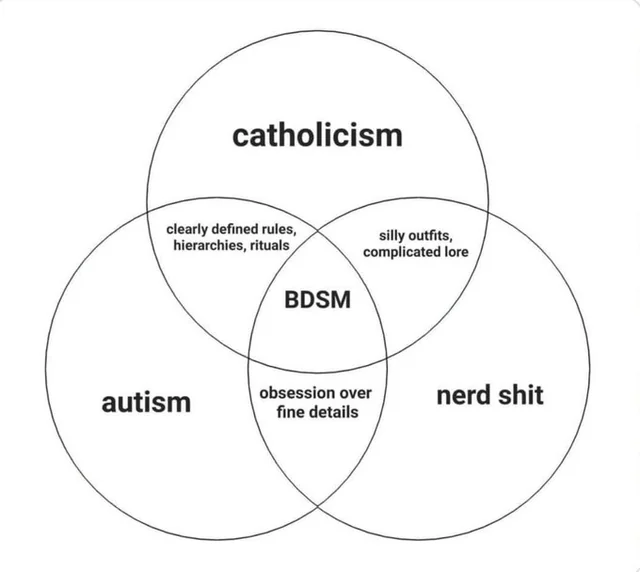
All in all, I'm not surprised that so many early voices in the TRPG communities embraced Gor - the setting seems almost tailor-made for gaming, especially the sort of gaming that predominated in that era. I have no doubt that more than one DM at the time used the setting for their games. We know such a thing wasn't unheard of - Wilderlands of High Fantasy began as a campaign set in Tolkien's Middle-Earth before the PCs were teleported elsewhere, for instance. Surely people noticed the same points I did and realized how ripe they would be for gaming. And while the Gorean roleplaying community is largely more concerned with the bedroom than the table, a lot of what makes the setting appealing to one circle also makes it appealing to another. In the end, people into RPGs and people into BDSM aren't so different - and we can see that principle at play here.

We're almost done with this series, but before we go, I still have one post left in the tank - one devoted to things I personally find cool about Gor as a setting, now that all the theoretical stuff is out of the way. Until then, I wish you well!

Wednesday, January 15, 2025

In Defense of Gor, Part 2: Gor in Gaming

This is actually the
most SFW cover I can find.
I'm pleasantly surprised by the reception my last post received, arguing that the infamous Gor novels are worth a look as a source of inspiration for pulpy, sword-and-sorcery-flavored gaming. But I'm not the first person to make such an argument. The influence of the Gor series goes back almost as far as the TRPG hobby itself. It's often been buried, and given the reputation the series has accrued, that may be a deliberate effort on the parts of various rights-holders - but a look into the history of tabletop gaming reveals that there is a Gorean connection behind some surprisingly influential developments, not just in the world of gaming but pop culture as a whole.

There are many seminal works of fantasy literature in the first edition Dungeon Masters' Guide Appendix N, and the ways in which these works influenced the game, its tropes, and its elements have been studied time and time again by people far more qualified to speak on the subject than I. The Gor novels are not a listed influence in any version of Appendix N. Given how they are directly referenced in other works from the same period, as I will discuss later, I don't think this was an omission based on the content of the series or its reputation. Gor did not accrue the image of something taboo among mainstream discussions of fantasy and science fiction until later. It seems more likely to me that Gygax simply didn't read or wasn't a fan of the novels, and thus they don't appear on a list curated by him.

What is known, however, is that the other co-creator, Dave Arneson, was a fan of Gor and did reference it in his work. Quite a bit, actually. To see the Gorean influence on early D&D, we need to start with materials that were written by him - most famously, Blackmoor, the second supplement to the original 1974 edition of D&D. If we really want to get to the source, though, we should look in particular at The First Fantasy Campaign, a collection of rules Arneson used at his table that was published by Judges' Guild in 1977. This is unfiltered Arneson; it reads like the ramblings of a madman, with no real regard to layout or organization, and shoves you right into the material without a proper introduction or preface. It's a bunch of lists, tables, and house rules in no particular order. It seems that editing Arneson's rules was not a priority. So we can assume that the elements he includes do in fact capture his influences in as pure a form as we can get.

It's worth noting, then, that The First Fantasy Campaign has a lot of rocs in it. They're listed as purchasable, they appear in encounter tables, and many cities are listed as using roc cavalry in their armies. One note, in particular, describes a larger variant of rocs called tarns. In the Gor novels, tarns are large birds used as beasts of burden and are ridden into battle; the series' most recurring protagonist, Tarl Cabot, is a tarnsman, ie. one who rides a tarn. What's more, Arneson's rocs occupy much the same role that tarns do on Gor; stats are listed for "war tarns," "cargo tarns," and "racing tarns," all of which exist on Gor. Furthermore, in "The Temple of the Frog," a dungeon Arneson includes in the Blackmoor supplement, mention is made to "landing points for rocs" on the building's edge - many Gorean buildings include ledges on higher floors for tarns to perch on.

Despite a singular reference to tarns being "same as rocs but larger in some cases," the text seems to use the terms "roc," "tarn" and "eagle" interchangeably, listing "tarn trainer" and "eagle rider" on the same list when listing upkeep of hirelings. The ways in which Arneson uses rocs as rideable animals also implies he isn't thinking of the elephant-eating monsters of Arabian mythology. We can assume any time Arneson refers to a large rideable bird, he has tarns in mind. Since The First Fantasy Campaign still uses the terms "hobbit" and "balrog" instead of "halfling" and "balor," it seems unlikely that rights issues were behind this terminology. Most likely, this is the result of The First Fantasy Campaign being generally unedited; there is little stylistic consistency with the book as a whole.

What's more, on the same list of hirelings and their upkeep requirements, Arneson lists separate rates for "male slave," "female (Red)," female (White)," and "female (Special)". While the color-coding of female slaves is not explained in the text, the terminology is taken directly from Gor. There, a "white silk slave" is a virgin, and a "red silk slave" is not. I'm not sure what "female (Special)" refers to here, and frustratingly, Arneson doesn't give any explanation. It might be a reference to Gor's "exotics;" slaves bred to have inhuman traits such as venom (also a woefully underexplored concept in the series), but in the books this phenomenon is not limited to female slaves, and I would think that there would be more game mechanics for something like that. Seems like a good excuse for a random table.

This is a bit of theorizing on my part, but one idea that seems to have originated with Arneson was oozes as a class of monsters, which cemented slimes, jellies, puddings, and the like as a staple of fantasy bestiaries. It's attested to by Gygax himself that Arneson was the first DM to use a black pudding, and many commentators have traced this back to 1958's The Blob, which is certainly plausible, given Arneson's stated love of monster movies. However, I think it's worth noting that 1969's Nomads of Gor includes a delightfully pulpy interlude where Tarl is fed to a living corrosive ooze, kept in a pit in the palace of a corrupt merchant, and must fight his way out. Given we have hard evidence that Arneson read the Gor books, it's quite possible that this creature influenced his creation.

But if I had to pick the one instance Gor was arguably at its most influential, not only on D&D but on gaming and the fantasy genre as a whole, that traces back to Supplement II.

Let me ask you a question. What comes to your mind when I say the word "assassin?" If you read this blog, probably a guy in a dark cloak, probably with a hood, holding a dagger and sneaking up on someone to stab them. Maybe, if you're younger, a white-clad figure doing parkour up the wall of a Gothic cathedral, or Keanu Reeves in a slick suit dispatching a horde of henchmen with cinematic gunplay. If you ask an older person, or someone who knows nothing about fantasy, they'd probably think of someone with a sniper rifle shooting the President from a book depository. Before the 70s, that's what most people would say. The idea of the assassin as a class, with a distinct set of skills, equipment, and associated tropes, owes itself to two things: the meteoric rise in popularity of the pop-culture ninja (specifically the pop-cultural stock character, which has little in common with the historical ninja of feudal Japan), and the D&D assassin class, first introduced in Blackmoor.

Many, citing Arneson's established precedent of drawing from Gor, have posited that this class was inspired by the Gorean Assassin Caste. If this is true, this means that Gor directly inspired an entire character archetype, and that Pa-Kur the Master Assassin has as much of a valid claim to fame as being such a model as Aragorn does for rangers. However, I'm not entirely convinced this is the case. The primary class features of the original assassin class are the use of disguises, which we do not have much textual evidence of Gorean assassins using, and the use of poisons, which Gorean assassins explicitly do not use, as they view it as impersonal and cowardly. There are some links, however. Blackmoor's assassins work in guilds, with temples and a defined structure, much like how Gorean assassins, though termed a caste, are not born into it and instead join such an order, pledging their lives to its service. Also, Blackmoor's assassins gain the right to challenge their guildmaster in a duel at 12th level, and take over the position if they kill them. This could be related to how Gorean assassins are always trained in pairs, with their final task being for one of them to hunt and kill the other in order to be inducted into the caste. Gor may have influenced the assassin class, but I do not think it was the only source.

All in all, looking at both textual and contextual evidence, it is undeniable that Gor was an influence on Dave Arneson in particular, and by extension D&D. However, its influence on the gaming scene didn't stop there, and Gor references continued to crop up in gaming materials.

In terms of official material, Dragon Magazine used to run a feature called "Giants in the Earth," listing game stats for characters from existing works of fiction. Issue #61, from 1982, stats Tarl Cabot, courtesy of Glenn Rahman. What's interesting is that he is listed as Lawful Evil and his misogyny is described as a character trait, but the text explicitly connects this to his upbringing with an abusive aunt, an in-universe explanation for his outlook. This might indicate that at this time, at least with this one author, Cabot was viewed as a flawed anti-hero, not as a mouthpiece for Norman's alleged views, and his outlook on women was viewed as just a character trait, not something assumed to be "natural" in a man. One could argue that Rahman may have portrayed Cabot this way as a means to criticize the novels, but the text makes several allusions to the events of the books as late as Raiders of Gor from 1971, which most people online will tell you is well after the series took on a BDSM tint. If Rahman truly disliked the series, I doubt he would know as much about the plot as he alludes to. Most people bail out by that point. If true, this would support the evidence that it was relatively socially acceptable to read and enjoy Gor novels, even later Gor novels, in the gaming community at this time.
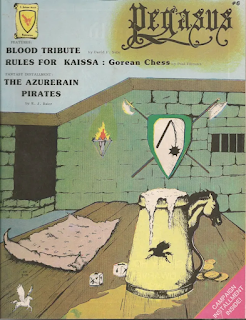
There's something charming in
the naive earnestness of early
third-party gaming mag covers.
Also, Judges' Guild's magazine, Pegasus, published Gor-related gaming content. While I was unable to find any scans, the sixth issue (also from 1982) boasts on the cover that it features an article by Paul Elkmann with rules for kaissa, a chess-like game described in the series. Of note to me is that kaissa would not feature into the plot of any of the novels until Players of Gor two years later - remember that title, we'll come back to it - and even then, the full canonical rules have never been established. It would be interesting to compare this interpretation of kaissa to what we know now. But it also confirms what we know - there were people in the tabletop RPG community in the late 70s and early 80s who openly read the Gor books and used them as a source of inspiration at the table. If the kaissa from the Pegasus article is intended as a minigame as part of an existing campaign, it may indicate that people then were even using D&D or other RPGs to play campaigns in the world of Gor.

What about across the pond? I've long posited the existence of a British old school tradition, linked to but possessing distinct qualities from its American counterpart. There, too, Gor was known and accepted in the gaming sphere. Both Rick Priestly
and Tony Ackland note Gor among the books they read in developing Warhammer in this interview; Ackland in particular allegedly designed Warhammer's war eagles after the tarns, but I was unable to find a source to back up this anecdote. To me, though, the clearest sign of Gorean DNA in Warhammer isn't the war eagles, but something else entirely: the Skaven.
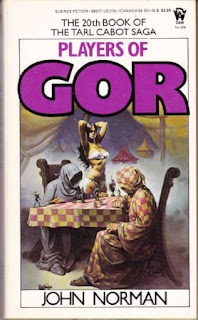
This book walked so
Vermintide could run.
Yes! Numerous people have written on the various sources that came together to form the Skaven over the years. And, while I don't think anyone involved in their development confirmed this one way or another, I would not be surprised if Gor was one of those sources.

You see, in 1984's Players of Gor, one minor character is Nim Nim, a slave who belongs to a race known as "the Urt People." Nim Nim is a fairly minor character, all things considered. He only appears in one book, and we never meet any other Urt People before or since. However, from his example, we do know that such a race exists in the setting, and are described as having hairy bodies, large eyes, narrow faces, a hunched stance, and a habit of travelling in large packs. It should be noted that in Gor's ecology of made-up animals, an urt is a small rodent pest that takes the role a rat would on Earth. Thus, the Urt People are essentially rat people (I should now clarify, for the sanity of my readers, that although Nim Nim is a slave, there is no indication he is a pleasure slave; as I said before, that is not all slavery on Gor is about). They debuted in a book that came out two years before the Skaven first debuted in "Vengeance of the Lichemaster," a Warhammer scenario published in the Citadel Spring Journal.

None of this means anything on its own - there have been many examples of rat people popping up in fantasy. However, the Urt People speak in a particular dialect that includes repeating most things they say twice, much like Skaven are known for doing.

"What do they call you here?" I asked.

"Nim, Nim," it said.

"I am called Bosk," I said.

"Bosk, Bosk," it said. "Nice Bosk. Pretty Bosk. More larma! More larma!"

I gave the creature more of the hard larma.

"Good Bosk, nice Bosk," it said.

I handed it another bit of larma.

"Bosk want escape?" it asked.

"Yes," I said.

"Bad men want do terrible thing to Bosk," it said.

"What?" I asked.

"Nim Nim afraid talk," it said.

I did not press the creature.

"Few cells have table," it said, fearfully. "Bosk not chained."

I nodded. "I think I understand," I said. Not being chained, and because of the table, I had been able to witness the cruel spectacle in the courtyard. That I supposed now, given the hints of the small creature, was perhaps intended to give me something to think about. I shuddered. Much hatred must I be borne in this place.

"More larma!" said the creature. "More larma!"

I gave it some more larma. There was not much left. "They intend to use me in the baiting pit," I speculated.

"No," said the creature. "Worse. Far worse. Nim Nim help."

"I don't understand," I said.

"Bosk want escape?" it asked.

"Yes," I said.

"More larma," it said. "More larma!"

I gave it the last of the larma.

"Bosk want escape?" it asked.

"Yes," I said.

"Nim Nim help," it said.

(I brought this up to Gideon in the comments of a now-deleted post on the history of the Skaven at Awesome Lies, one of the best blogs out there for Warhammer history, and he actually went back and edited his post to mention the Urt People. Alas, he's dealing with technical issues that prevent me from linking that one. So you get the full quote to see what I'm talking about.)

Now, Skaven would not develop these particular speech patterns until later, with the Kaleb Daark comics. But knowing the time frame, and the fact that people at Games Workshop did read Gor novels and considered them an influence, it seems reasonable to theorize that Nim Nim was on the writers' minds when they needed to come up with a distinct speech pattern for a rat-like humanoid. In all other regards, Urt People are nothing like Skaven - they certainly don't seem to be a threat to any Gorean city, and don't appear particularly warlike - but the similarities cannot be denied.

Whether one likes the series or not, it is inarguable that Gor was one of the many sources that informed the early development of tabletop gaming as a community, and the tropes, stories, and settings that grew during this era. At this time, it was not particularly regarded as anything to be ashamed of or to reject, and was mined for inspiration just as much as other works of the genre. Regardless of whether or not we feel this source material is offensive, obscene, or objectionable, we shouldn't bury the truth. I think it's important to recognize that Gor did play a role in the perfect storm that allowed tabletop RPGs to flourish, and that it is a part of the canon of inspirational material that underpinned D&D and beyond, for better or for worse.

But why Gor? Was it simply the fact that the people behind the scene would read any fantasy literature they could get there hands on?

I think there's more to it than that. Gor, in my opinion, is actually a very gameable setting. I don't doubt that in those days, more than a few would-be DMs looked at the books as a source of inspiration, either in terms of the ideas contained within themselves or how they were presented. With its focus on worldbuilding, I can easily see how it would appeal to the same sorts of people interested in the lore of TRPG settings. Even I have a hard time reading Gor lore and not thinking of ways it could drive scenarios at the table. And in my next few posts, I'm going to shed light on why. See you next time!

Monday, January 13, 2025

In Defense of Gor, Part 1: Addressing Misconceptions

Also, no one feels the need to hesitate
about defending Forgotten Realms -
and I could tell you some things.
A while back, as a Christmas present, I got a set of Attillan Rough Riders for Warhammer 40,000. As-is, they don't really fit with any of the projects I'm working on at the moment, but they do look pretty cool, and I've been able to incorporate some of the parts into a few kitbashes. But in doing so, an idea sprung into my head - the parts, or at the very least some of the heads, would be a decent base for kitbashing an army of Wagon People from one of my biggest guilty pleasures in fantasy literature - John Norman's Chronicles of Gor.

Yes, that Gor.

I'm willing to bet that most people reading this have never heard of Gor, or have only heard it as the most profane and reprehensible hate literature in existence. Anyone who brings it up these days is either a fan of the books or doing so disparagingly, and the former category have essentially cordoned themselves off from the rest of society so as to be impenetrable to outsiders. Even 1d4chan/1d6chan, normally the South Park of the TRPG community when it comes to shock humor, has an article on the series that's one of their most vitriolic.

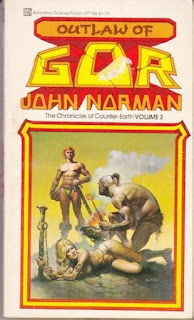
What might surprise you is that things weren't always this way. In fact, Gor was surprisingly influential in the early science fiction and fantasy communities - and, yes, that includes the early tabletop gaming community. It was never exactly mainstream, but it did have its influence, and there was a time where you could say you were a fan of Gor and people wouldn't recoil from you making the sign of the cross. It even got a few (very bad) film adaptations, one of which made it onto Mystery Science Theater 3000 (Outlaw, S05 E19 - it has absolutely nothing to do with the source material, but Jack Palance is in it, with predictable results).

And you know what? I know where those early names in the community were coming from - because Gor might well be one of the most gameable settings out there.

Let me back up a little, though. And put down those torches and pitchforks. Let me answer a few questions, and hopefully we can come away with a little more understanding.

What's a Gor?

A Beastman warrior, forming the majority of the Brayherds of Chaos, which have threatened the Empire for generations.

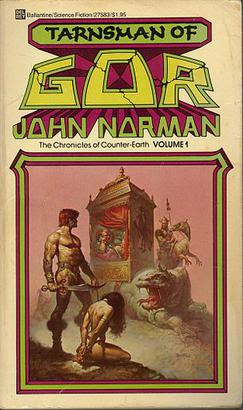
Okay, but all jokes aside. Chronicles of Gor is a long-running series of pulp sword-and-planet novels (a la John Carter of Mars) written by John Norman, starting with Tarnsman of Gor in 1966, and still being published to this day. Not all the stories feature the same characters or narrative, but they largely concern a university professor who is abducted by aliens and taken to a planet called Gor, orbiting the Earth on the other side of the sun and inhabited by the descendants of various human civilizations from throughout history coexisting at a roughly Iron Age technology level, where he becomes a powerful warlord.

Okay. What's so bad about that?

So to understand why Gor developed the reputation that it did, you need to understand the context surrounding it.

See, the books themselves are not really very good. The writing is dry, and the stories are largely an excuse to get the characters from place to place. But what really sets it apart is the worldbuilding. The world of Gor is incredibly intricate and detailed, and large swathes of the books are devoted to detailing different parts of the setting, its various cultures, and their practices.

It just so happens that these practices involve slavery, including sexual slavery. John Norman was writing in the time of the Sexual Revolution, and he has a few nonfiction publications exploring the rising fetish culture of the era. That context shaped the books, too. As such, the books detail various practices the Goreans use to keep, train, and use sex slaves. And when the BDSM community was rising in prominence at the time, many latched onto the descriptions in the books and used the information to shape how they handled things in the bedroom.

It's important to realize that the earlier Gor novels don't focus on this all that much. It's always there, but it's not really given much more focus than, say, Gorean honor culture, or weaponry, or the caste structure. The novels themselves aren't much different than what you would find in, say, a Conan the Barbarian story.

But due to the timing, some of the most prominent and most vocal members of the fandom were those people in the early BDSM community. And for better or worse, John Norman knew his audience. He realized that his books were selling because people read them for the smut, and he started writing more and more for those people specifically, with later books focusing much more on sexual slavery and including more focus on erotica. As such, the perception of Gor shifted to being "a sex thing" more than anything else, and that fact made it harder for outsiders, who might have liked pulp sword-and-planet adventure but had no interest in BDSM, to get involved. This in turn led to the community becoming increasingly tied to fetish culture.

That does not take away from the fact that, if you look past the sex stuff, it's still a wonderfully detailed, evocative, and elaborate setting that's just asking to be played in.

But Gor is about how all women should be sex slaves and how the ones that don't want that should be raped until they do!

This gets into the other side of the coin with the changing perceptions of Gor - the books started out as a part of the science fiction and fantasy fandom, but switched focus over time to instead be targeted at the BDSM community. These later books contained material that was characteristic of erotica, particularly BDSM erotica, including depictions of sexual slavery and sexual violence that were intended to titillate readers. But the books were still viewed through the lens, and judged by the standards, of people in the speculative fiction community, where this material was not commonplace. Naturally, this led to people believing that the BDSM content was in some way a reflection of the themes of the stories, or the personal beliefs of their author.

This isn't exactly true, on either aspect. Gor as a setting is not really about sex slavery or misogyny. It is stated on numerous occasions in the books that 98% of Gorean women are free. We don't have a figure for the entire planet, but it is mentioned that about 10% of the population of the city of Ar is made up of slaves - which is proportionate to some estimates of the Roman Empire, if not lower. Most slaves are female, but of these, many of these are used for labor, not sex. It's just that much of the writing focuses on female sex slaves, but this is not stated nor intended to be a representative sample of the norm. Norman focused on it because it sold. And the themes of the stories themselves are not unusual for BDSM erotica - if anything, they're tame by those standards; the books do not go into graphic detail on abusive or degrading practices, and a surprising amount of the sexual content is told through implication and occurs "off-screen." This is more than what can be said about some of the novels your bookstore probably has on the erotica shelf. The Gor novels, then, only seem offensive by the standards of "serious" science fiction.

As for John Norman himself, we have no reason to believe that the content of the later Gor novels is reflective of his personal philosophy. If you look into his nonfiction writings on sex, his outlook is not dissimilar to that of accepted voices in the modern BDSM community. His 1974 book Imaginative Sex focuses on the practice of erotic roleplay, and there he specifically lists consent and trust of one's partner as paramount in such a sexual relationship, as well as the fact that there are boundaries in one's sex life and personal life that must be respected.

In fact, some of his advice is hilariously quaint by modern standards. When discussing BDSM practices, he goes as far as to insist that using an actual whip on your partner is unacceptable; one should instead pretend to whip their partner because the fantasy of being whipped is erotic, but actually evoking physical pain is an inherently abusive act. I've never been to one, but I can say with confidence that if you said that in most BDSM clubs you would be laughed out of the room.

Also fun fact: Imaginative Sex presents several femdom scenarios. Just in case you thought he actually believed the stuff about men being naturally dominant. Sorry, try again.

But isn't there a culture based on Native Americans that are literally called "Red Savages?"

Yeah, I'll give you that one, that's pretty bad. That's why I'd call them Plainsmen if they came up in a game instead. There. Done.

It's important to realize that the Gor novels are products of their time. They were written in the 60s by a man who was born in 1931 - for reference, that's not a baby boomer; boomers are younger than that. Of course they're going to have things that won't fly by modern standards. So do plenty of stories that are beloved by the TRPG community. Kuo-Toa remain a staple of the Monster Manual, and they are based on a story about how mixed race people are disgusting and horrifying. We can accept that times were different then and strive to be better.

But wasn't there a Gorean sex cult involved in human trafficking? And don't a lot of Gorean BDSM people think you shouldn't use safewords?

Yeah, and they're pieces of shit. As previously stated, those people do not represent John Norman's beliefs or vision. There are going to be people like that in any fandom; they shouldn't be allowed to tarnish the good parts of the community. Should we judge D&D players by the standards of that guy who died LARPing in a steam tunnel in the 80s? Oh, wait, people did, and we laugh at them to this day.

But the Gor novels are poorly written anyway!

Yeah, you're not wrong there. John Norman is not a particularly good writer. What he is is a good worldbuilder, and the quality (or lack thereof) of his prose shouldn't devalue the genuinely interesting and gameable ideas he puts forward.

I'm uncomfortable with RPing sex at the table. Especially with strangers.

So am I. But as stated, there is plenty of material in Gor, as a setting, that has nothing to do with sex. There is no reason a Gor campaign has to address the topic of sex at all, let alone BDSM. It's important to know the boundaries of your players and what they're comfortable with and what they aren't (hey, that sounds familiar...). Yes, the official Gor TRPG includes sexual skills. I get why they did that, but I still find that weird and uncomfortable and I wouldn't use them if I was running it.

If you think the entire setting is too closely associated with fetish culture to feel comfortable using it at the table, that's fine. You can always take inspiration from certain parts without using the whole thing. You can just change certain names, and hey, anyone who notices can't call you out on it without outing themselves. There's plenty of ways you can make use of the material and stay well within your comfort zone.

I was in the Gorean RP community and it's full of elitists who think people who don't follow the books exactly are subhuman!

I wouldn't want to play with those people either. Again, we shouldn't let bad actors color a given fandom or community. When I'm running an established setting, regardless of what it is, that is essentially our version of that setting at the table, and canon only matters as long as it's fun. Hell, there are aspects of Gor canon I would do differently (more on that in a future post). Anyone who doesn't like that isn't going to be fun to play around, and games are supposed to be fun, so there's no room for them at the table. You don't have to play with them if it's going to make for a miserable experience.

I'm in the Gorean RP community and I think people who don't follow the books exactly are subhuman! Gor isn't a game, it's a way of life!

If your only conceivable notion of using existing source material as fodder for creative thinking is directly reenacting scenes from it verbatim, you sound like a thoroughly uninteresting person. Next.

Something something Houseplants of Gor! Hahaha, look at how funny and original I am!

Please, for the love of god, get another joke. People who don't like Gor have fewer jokes than Imperial Guard players or transphobes. Seriously, that was kind of funny in like the 90s, but it doesn't need to get brought up every time someone mentions Gor. Give it a rest.

Well, that does it for the first post in a perhaps ill-advised series of essays. Now that we've got that out of the way, I'm going to devote my next posts in this series to exploring the influence Gor had on the fantasy gaming scene (you'd be surprised!), discussing the factors that make it lend well to RPGs, and highlighting some parts I personally find cool. Stay tuned!