
In fact, after reviewing these things, I am convinced that, had he been born ten years later, John Norman would likely have been an early contributor to the RPG industry. To date, the only official Gor RPG is Postmortem Studios's Tales of Gor, originally published in 2017. We have no reason to believe that Norman ever played an RPG, or even knows what one is. But he was an advocate of roleplaying as a activity in Imaginative Sex, citing it as a natural behavior that one should not be afraid or ashamed of engaging in, and as a safe outlet for desires that would be unethical or impossible in real life. Yes, he's talking about a different kind of roleplaying game here, but it isn't hard to see how he might be intrigued by tabletop gaming if he had been in the circles where it first arose. For that matter, the setting he created shares many traits in common with some of gaming's most enduring settings, as well as the ideals elaborated by those writing on the subject.

Anyway, back to our subject of the day: what makes Gor so gameable?

Though the novels are infamously dry and many find the prose unexciting, it cannot be denied that a lot of thought went into the creation of Gor as a setting. Over the course of 38 books, Norman extensively details multiple cultures, locations, and characters, exploring what this world looks like, who lives there, and how these people think, act, and behave. We know how Goreans fight in wars, what their etiquette is like, how their castes are structured, what they eat, and so on. This is the same sort of information that might be found in an RPG setting guide - and because of it, it would be quite easy to run a campaign that feels like it authentically takes place in the same world as the original stories.
In fact, many books in the series focus on a journey to a particular region of Gor; for instance, Tribesmen of Gor takes place in the Tahari Desert, and Explorers of Gor focuses on the equatorial jungles of Schendi. They describe the inhabitants of these regions, some key locations there, and the sorts of things that may be encountered. It can be argued that Norman's focus with these entries is more on worldbuilding than storytelling - which makes them subpar as novels, but quite like a systemless RPG sourcebook, with a narrative attached. Much like the Mystara Gazetteers, these books detail specific parts of the setting and bring them to life, creating a deeper world.
It isn't hard to see how useful this much lore would be for the purposes of roleplaying in the setting. I'm far from the first person to note this - in the 90s, there was a substantial Gorean roleplaying community on IRC, which to my knowledge has mostly moved over to Second Life these days. While, yes, the people here are mostly engaged in a different kind of roleplaying, they still found that the books provided enough material for them to conceivably envision themselves in the roles of characters in the setting - and the same could be said for players in an RPG campaign.
I'm reminded of this post on Erin Hunter's Warrior Cats series, arguing that the series is technically an RPG. Though is is not presented as an RPG, and includes no hard mechanics like stats or die rolls, the setting is detailed and codified enough that one can easily understand how new stories with new characters could be told within the framework of the world - as is evident when one sees the multitude of original characters created by the fandom. Gor is much the same way. Even before it received an RPG, one could argue that the novels provided all the contextual details and dynamics to ground roleplaying in the setting and make sure it was consistent and in keeping with canon.


One thing we know from all that worldbuilding is that Gor is decidedly not a Flintstonist setting. Goreans do not think, behave, or act like modern-day people do; in fact, that is kind of a recurring theme of the novels. Even besides the presence of widely accepted slavery, there are a number of key differences between Earthling and Gorean society - Luther even has an entire scroll on this. These range from superficial jargon (Goreans say "tal" instead of "hello," and "I wish you well" instead of "goodbye") to characterful bits of background detail (Goreans sit on floors, with free men sitting cross-legged and women and slaves sitting on their knees; we do have a few examples of women sitting cross-legged, and this is seen as a provocatively tomboyish behavior) to things that could impact gameplay or create new challenges (Goreans haggle over prices at stores and do not set fixed prices for items).
With so much detail given to culture and sociology, a campaign set on Gor would provide a great opportunity to immerse players in a truly exotic world, rather than a reskin of their everyday lives. There are many ways this could create enjoyable and engaging roleplaying opportunities. It is true that this sort of thing isn't for everyone; some people may feel intimidated by the thought of portraying a character whose thought processes and the context they exist in are so different from those of the player. And few gamers enjoy having to read a bunch of worldbuilding notes in order to play the setting consistently. Luckily, there are a few aspects of Gor as a setting that make this easier.

So a Spartan, a Viking, and a Mongol walk into a tavern. They find a table where a Bedouin is engaged in a fierce arm-wrestling match with a Scythian. A samurai is watching from a table where a forest-dwelling amazon lies slumped over drunk. Then a Wookiee gets up and flips his table in a rage.
No, it's not the setup to a very bizarre and esoteric joke. This scene could very well play out on Gor - granted, it would be an unusually cosmopolitan tavern, but nothing says that it couldn't happen.
Gor is a History's Greatest Hits setting, where cultures and locations based on multiple real-life eras coexist simultaneously. Like Howard's Hyborian Age, it's a setting where all sorts of pseudo-historical adventures can take place without anything feeling out of place. In fact, this is justified within the lore of the setting - Gor is a planet located opposite the sun from Earth, and throughout history, the aliens running the planet (it's a long story) abducted humans from different cultures and brought them to Gor, restricting their behavior so that their cultures would stay relatively unchanged over time. Thus, you have a culture descended from the Vikings existing side by side with one descended from Greco-Roman traditions, and so on.
This means that one can get a pretty good idea of what several Gorean cultures are like by perusing the history of the groups they're based on. None of the cultures are an exact match, and some borrow more heavily from real life than others, but there is enough precedent for the different cultures that a newcomer doesn't necessarily need to consume a lot of exposition to get the gist. As a bonus, this also means that if a DM wants to do some worldbuilding of their own and introduce a new culture to their personal Gor, they can do so and have it make sense in the setting - they just need to find a culture Norman hasn't already covered.
4. Isekai
They're even being meta
about it now.
For those not versed enough in weebery, isekai is a Japanese word translating to "other world." It's used to describe stories where the protagonists come from a mundane world like our Earth, but are transported to a new, fantastic setting. It's become very popular in anime in recent years, but the term has also been used to describe classic fantasy stories like The Wizard of Oz or John Carter of Mars.
Gor is also a setting that lends itself to the isekai route. Those same aliens that abducted a bunch of historical people also routinely abduct modern-day humans, on a much smaller scale. Most of the series' protagonists are brought from Earth to Gor this way, usually as slaves, but sometimes for other reasons. This is useful for gaming purposes because it provides an easy excuse for PCs to not know everything about the setting.
A big reason isekai is so popular in anime is that it allows writers to portray fantastic worlds, but use protagonists the reader can relate to. This way, worldbuilding doesn't have to be delivered through long spans of exposition going over things the characters already know. The details of the world can be revealed to the characters at the same time it is revealed to the viewer. From a TRPG perspective, this would also allow for lore-dense settings to be introduced to players without requiring them to do homework in order to portray characters from that setting. A campaign in which the PCs are humans from Earth brought to Gor allows them to experience the world without it seeming weird if they get details wrong or don't know everything. And discovering more about the world can be a source of progression, allowing PCs to better understand the contexts surrounding them and their places amidst them.
This isn't a new concept in RPGs. Empire of the Petal Throne is known for the richly-detailed setting of Tekumel, which also boasts extensive worldbuilding elaborating on its cultures, social dynamics, mores, and customs. Many players have cited this as an obstacle, as they feel like they can't make characters who conceivably exist as a part of the setting without researching the lore. But this ignores how the setting worked in practice. MAR Barker would, famously, begin most of his campaigns where the PCs were foreigners arriving in Tsolyani lands for the first time. That way, they could discover the setting a little bit at a time, just as the players did, and gradually understand more and more of what was going on around them. A player in a Gor campaign wouldn't need to read all the books in order to understand the setting. Their character wouldn't have to know anything more than they did, and there would be established precedent for it.

All these points outline how Gor lends itself well to roleplaying. But what about specifically roleplaying games? Well, there's plenty for that as well. In the leadup to the fourth edition of D&D, Wizards of the Coast described the new default setting as points of light in a sea of darkness - a setting that mostly consisted of unexplored, inhospitable wilderness, with a few scattered, isolated islands of civilization. This way, the setting could feature exploration and high adventure, while still containing enough settled areas for parties to have a home base, as well as the possibility to get themselves involved in social intrigue.
It was a term that caught on, and it has been used to describe a number of different settings, with some noting it as the platonic ideal of an old-school D&D setting. It also happens to describe Gor pretty well. The social assumptions of Gor are grounded more in the ancient Greek polis than medieval feudalism. Each city is a self-sufficient unit with its own government, and its people consider themselves loyal to the city rather than to any higher-reaching state or culture. Cities rarely form colonies, and when they do, these colonies usually become independent once they reach sufficient size. This means that Gor does not really have anything comparable to a wide-reaching kingdom with centralized authority, and as such, there is plenty of wilderness in between the cities. This lends itself well to a campaign framework of traveling from a city to adventure in the wilderness, and then either returning to the city or traveling to another along the road, both of which are often seen in old-school games.
6. Megadungeons
This sort of thing.
Another common feature of old-school campaign settings is the megadungeon - a single dungeon large enough to comprise the setting for an entire campaign, often explored over the course of multiple sessions, with the PCs returning to civilization in between. Some of the earliest campaign settings seem to have grown around a single megadungeon and its adjoining city, like Gygax's Castle Greyhawk. Conveniently, there are a couple of locations described in the Gor novels that resemble megadungeons, or could easily be adapted into them.
One of these is the city of Treve, located in the Voltai Mountains, which forms the setting for Witness of Gor. Treve is a heavily fortified city deep in the mountains, renowned as a haven of thieves and cutthroats; it relies on raiding other settlements for food. The city is only reachable from the air, or through a maze of underground passages, narrow crags, and outposts; even getting there entails braving many dangers. Beneath the city is an extensive network of pits, tunnels, and corridors used to hold prisoners, with traps to prevent their escape. Is there anything more OSR than a lawless city of rogues built atop a vast subterranean trap-filled dungeon?
The other is the Sardar Mountains, Gor's holiest site, and the home of the Priest-Kings, the insectoid aliens that style themselves as the god-like rulers of the planet (more on them later). Though the mountains themselves hold cultural importance to Goreans - they are the site of festivals held four times a year where all Goreans may gather to sell wares and settle disputes, and all Goreans are expected to make a pilgrimage there during their lifetime - the Priest-Kings themselves dwell in an underground complex of tunnels and chambers containing strange creatures (including the aforementioned golden beetles) and powerful technology off-limits to the general populace. Surely a campaign involving raiding the Sardar Mountains under the noses of the Priest-Kings could provide plenty of excitement and opportunities for OSR gaming.
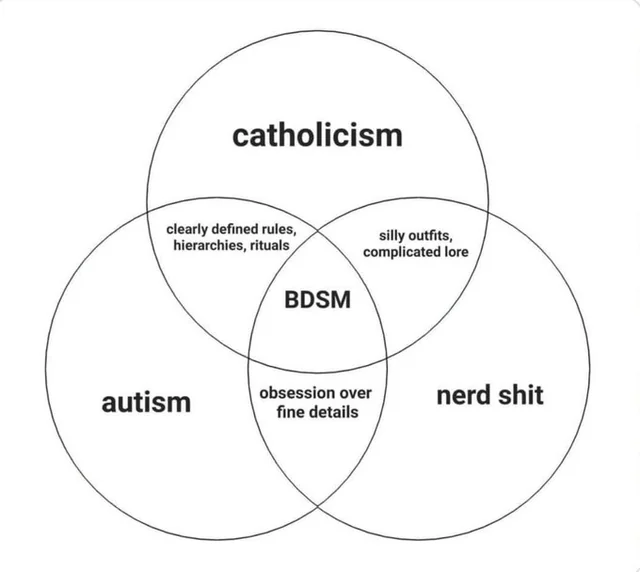 |
| I am this entire image. |
We're almost done with this series, but before we go, I still have one post left in the tank - one devoted to things I personally find cool about Gor as a setting, now that all the theoretical stuff is out of the way. Until then, I wish you well!

